Paid online surveys are legit. Companies pay real money for consumer opinions, and that market-research budget is what funds your rewards.
The real issues are modest earnings and scam look-alikes that crowd the same space, not the category itself. Legitimate research panels pay you and never ask you to pay them.
This guide covers how the money actually flows, what you can honestly expect to earn in a month, and the quick check that separates a real survey site from a trap.
How paid online surveys actually work
Brands and researchers pay to learn what real people think before they launch a product, price it, or run an ad. That spending is why a survey can pay you without ever charging a fee.
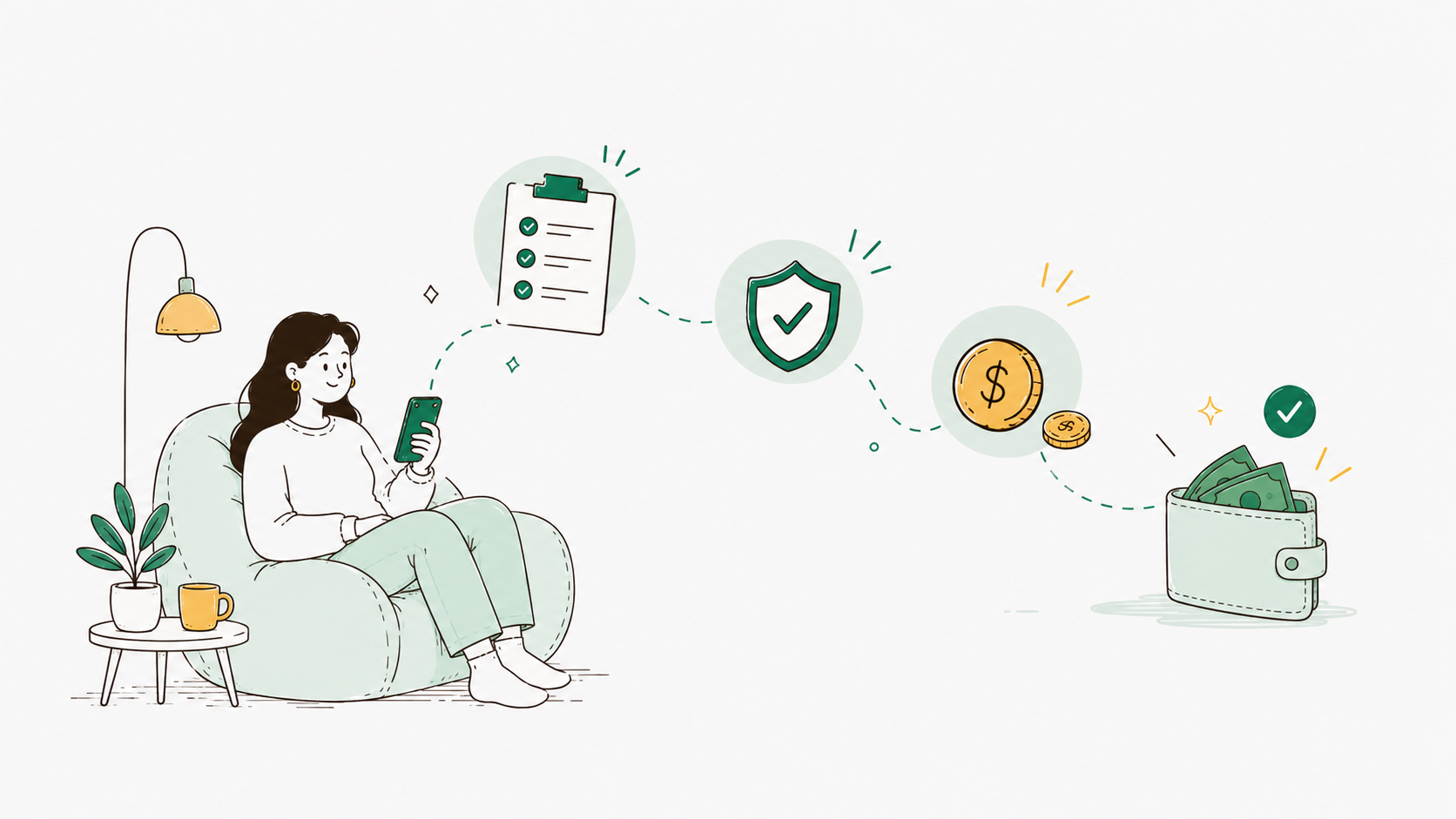
The money moves through three steps.
- A research company recruits a panel of everyday people.
- It matches each person to studies that fit their profile.
- Your answers go back to the client. You get a small reward for your time.
This is an established business. Indeed lists 20 companies that pay people to take market-research surveys, which tells you the demand is steady.
Fair pay exists here, too. Prolific, an academic-research panel, enforces a minimum hourly reward and recommends researchers pay at least $12.00 an hour.
The direction of the money is what matters. It moves from client to panel to you. Any site that reverses that flow and asks you to pay first isn't running market research.
Do online surveys actually pay?
Legitimate surveys pay real money, but the amount is small and you won't finish every survey you start. This is the part people get wrong, and it's why some dismiss the whole category as a scam when the earnings fall short of what they expected.
Your actual take-home depends on how well your profile matches available studies and how frequently you get screened out partway through. NerdWallet reports that survey pay is low for the time invested. Mid-survey disqualifications regularly leave people with nothing for the minutes they spent.
How much can you realistically make?
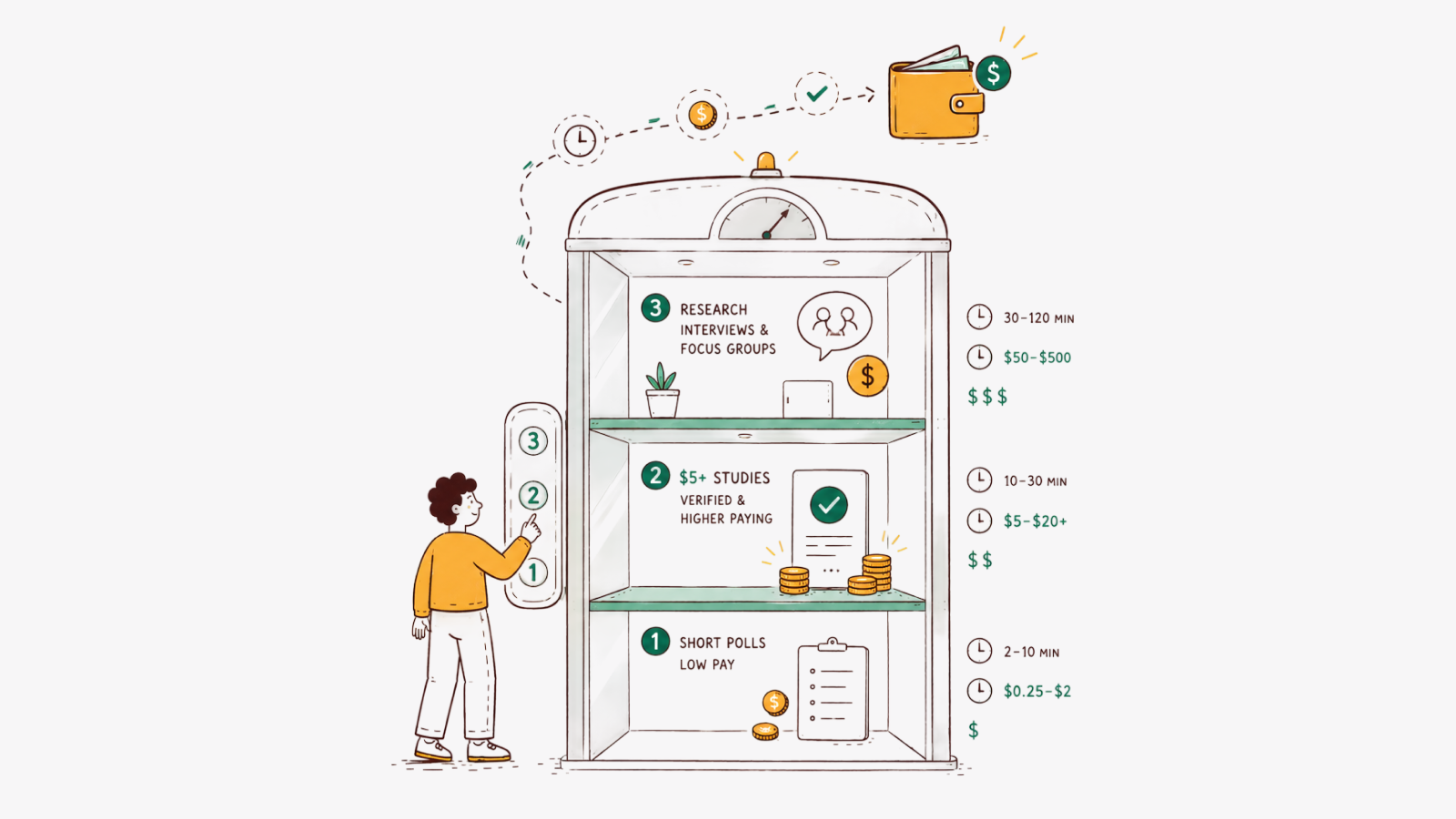
Most people earn spare-time money from surveys rather than a paycheck. Earnings trackers like SideIncomeFinder put a realistic figure around $100 to $300 a month at roughly $6 to $12 an hour, based on about an hour of effort a day.
Fair paid research sits at the higher end of that range. Prolific sets a participant floor of £6.00, about $8.00 an hour, and recommends at least £9.00, roughly $12.00. Everyday consumer panels tend to pay below that benchmark.
Three things move the number up or down.
- Profile fit: the more studies you qualify for, the less time you waste on screen-outs.
- Screen-outs: getting disqualified partway through is normal and pays little or nothing.
- Cash-out thresholds: many sites won't let you withdraw until you hit a minimum, and those vary a lot.
Those minimums matter more than they seem. NerdWallet lists Survey Junkie at a $5 cash-out and InboxDollars at $30, so you can withdraw the same $20 on one site while it sits stranded on another.
Signing up for two or three panels rather than one also cuts your idle time. When one has no matching studies, another may have a few waiting.
Can you make $100 a day from surveys?
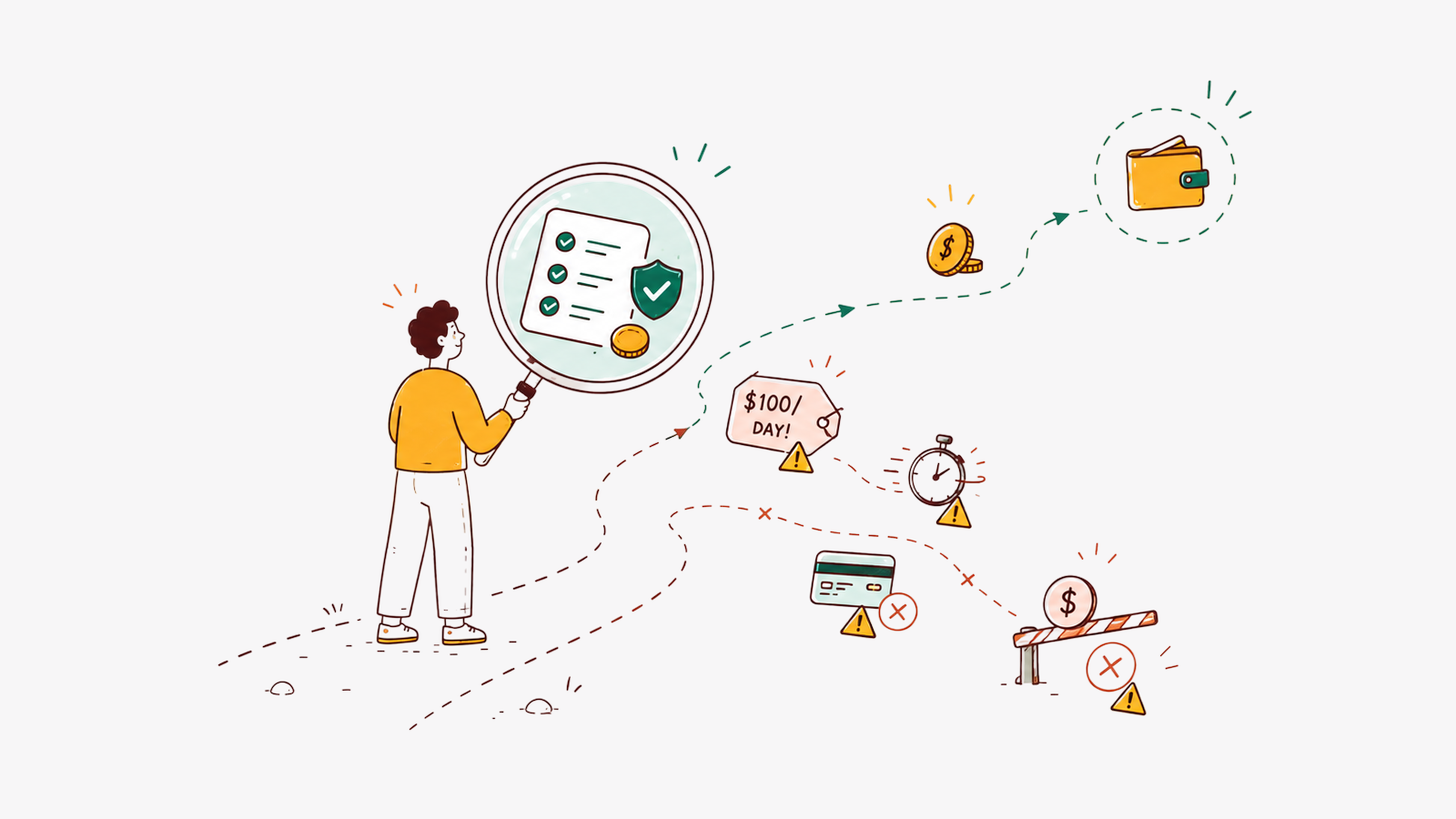
Surveys aren't a $100-a-day income, and any site promising that is waving the biggest red flag of all. Realistic earnings land in the range above, and even the top of it works out to about $10 a day.
The FTC's rule is simple: never pay anyone to get paid. Sites that dangle huge daily payouts almost always ask for an upfront fee or your financial details before any money appears.
No one gets rich taking surveys, and security researchers at Kaspersky say as much plainly.
How to tell if a survey site or app is legit
You can vet almost any survey site in under a minute by running through a short list of red flags and green flags. The check works the same whether you're on a website or a phone app.
Caution is worth the minute. US consumers reported losing more than $12.5 billion to fraud in 2024, a 25% jump over 2023, and 38% of the people who reported fraud said they lost money.
That figure came from about 2.6 million fraud reports, and the share of people reporting fraud who lost money rose from 27% a year earlier. Job scams, the category that fake survey work falls under, are among the fastest-growing pieces of that total.
Red flags of a survey scam
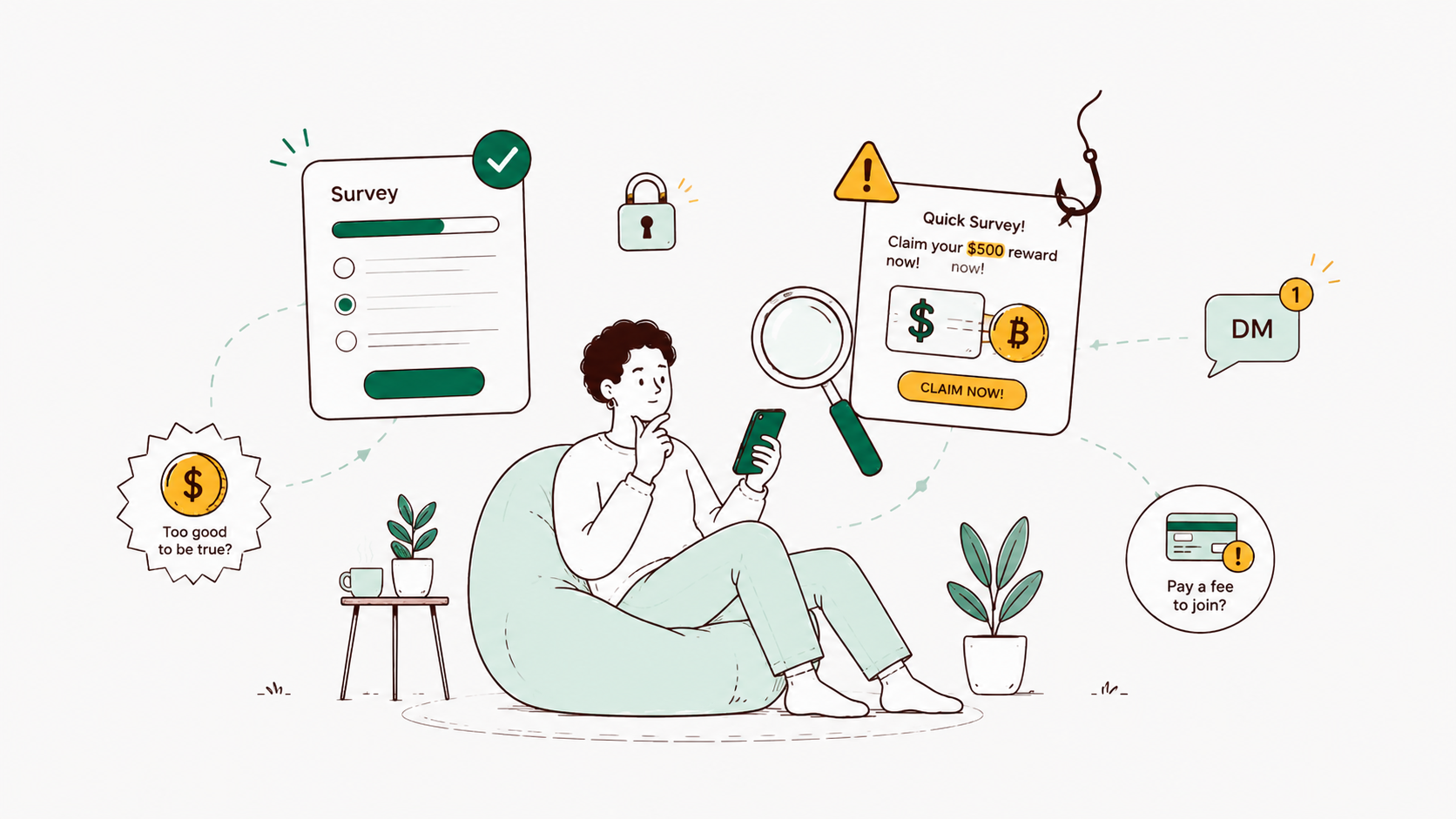
A few warning signs reliably mark a survey scam. Any one of them is enough to walk away.
- Upfront money of any kind, whether a fee, a starter kit, or a deposit before you can earn.
- Guaranteed or fixed payouts, like a promised daily income.
- Requests for sensitive financial data such as your bank account or card number.
- Pressure and urgency, a countdown or a "sign up now or lose it" push.
- Unsolicited job messages by text, WhatsApp, or Telegram about work you never applied for.
The strongest rule comes straight from the FTC. Never pay anyone to get paid, and ignore unexpected job texts about work you didn't apply for.
Kaspersky adds that you should never have to pay a fee to take surveys.
Consumer-education material backs the same list. A credit union's rundown of ways to spot a survey scam flags upfront fees, offers that pay far too much for the time involved, and requests for sensitive data as the clearest tells.
Fake "survey jobs" versus real panels
A fake survey job looks like easy microwork and ends with a demand for your money. A real panel pays you for opinions and never asks you to deposit anything.
The gap is widening fast. About 20,000 people reported gamified task scams in the first half of 2024, up from roughly 5,000 in all of 2023. In that time, task scams climbed from 5.6% of job-scam reports to 38.8%.
Reported job-scam losses topped $220 million in that same half-year. These schemes copy the look of real survey work, posing as simple tasks like liking videos or rating product images. Legitimate panels pay you. Scams eventually flip that and demand money from you to unlock higher earnings.
Green flags of a legit survey site
A site worth your time clears every flag below.
- Free to join, with no fee or purchase required to start earning.
- Transparent payouts and a cash-out minimum you can actually reach, or none at all.
- Real third-party reviews on Google, Trustpilot, or the BBB.
- A clear privacy policy that spells out what data it collects and why.
- Verifiable ownership, a named company with contact details you can check.
Kaspersky recommends this exact kind of vetting. It points to modest rewards, free entry, and a quick look at reviews and the privacy policy before you sign up.
Two of those flags are quick to test on a real example. TopSurveys names its operator in its terms, Top Surveys AB in Stockholm, and lets you withdraw earnings via PayPal, bank transfer, or gift cards from a $5 minimum, so a skeptical reader can confirm the basics in a couple of clicks.
Is it safe to share your data on survey sites?
Sharing data with legitimate panels is safe as long as you hand over only what a survey genuinely needs. A real panel wants basic demographics; it never needs the details that let someone steal your identity.
What data a legit survey needs
Legit surveys ask for basic demographic and opinion data, the kind that lets researchers match you to relevant studies. Age band, region, household size, and shopping habits are normal and low-risk.
Those questions repeat across studies for a reason. Researchers group answers by segment. One age-and-region profile can unlock several surveys over time.
The data still has value, so treat it with care. Norton warns that some third-party survey notification services sell your details to spammers, and recommends reading a site's privacy policy carefully before you sign up.
What a legit survey never asks for
A real survey never needs the information that unlocks your identity or your bank account. If any of these come up, close the tab.
- Your Social Security number or national ID number.
- Bank account or routing numbers.
- A credit-card or debit-card number.
- Your driver's license or passport details.
- Any upfront payment or "processing" fee to release your earnings.
Kaspersky says legitimate sites never need your Social Security number, bank, card, or driver's license details, and they never charge a fee.
A survey that wants any of that is fishing for your identity, not your opinions.
What to check before your first survey
The one-minute check does most of the work before you ever answer a question. Confirm the site is free to join, has a cash-out minimum you can reach or none at all, shows real reviews, posts a clear privacy policy, and never requests sensitive financial data.
Set your expectations at the same time. Screen-outs are part of the deal even on good sites.
Once a site clears that check, the last step is to put it to work. You can create a free TopSurveys account, start with short surveys, and cash out instantly via PayPal, bank transfer, or gift cards from a $5 minimum.