The best free money apps are legitimate survey-reward apps that pay real cash for your opinions, with a low cash-out bar and no fee to join. Most apps marketed as "free money" fall short of that, and this guide shows you how to tell the two apart.
These apps turn spare minutes into modest pocket money rather than a salary, and none of it counts as passive income, whatever a flashy ad claims.
US consumers reported losing more than $12.5 billion to fraud in 2024, a 25% jump over the year before, according to the FTC. Knowing which apps pay, and which ones drain your time instead, protects both your schedule and your wallet.
What are free money apps, and how do they pay you?
Free money apps are phone apps that pay you small, real rewards for tasks you actually complete. The most dependable task is the paid survey, backed up by secondary options like app-install offers or game milestones.
TopSurveys is one example: a cash-rewards app where surveys come first and game offers or offer walls fill the gaps when survey supply runs low.
How survey-reward apps make money
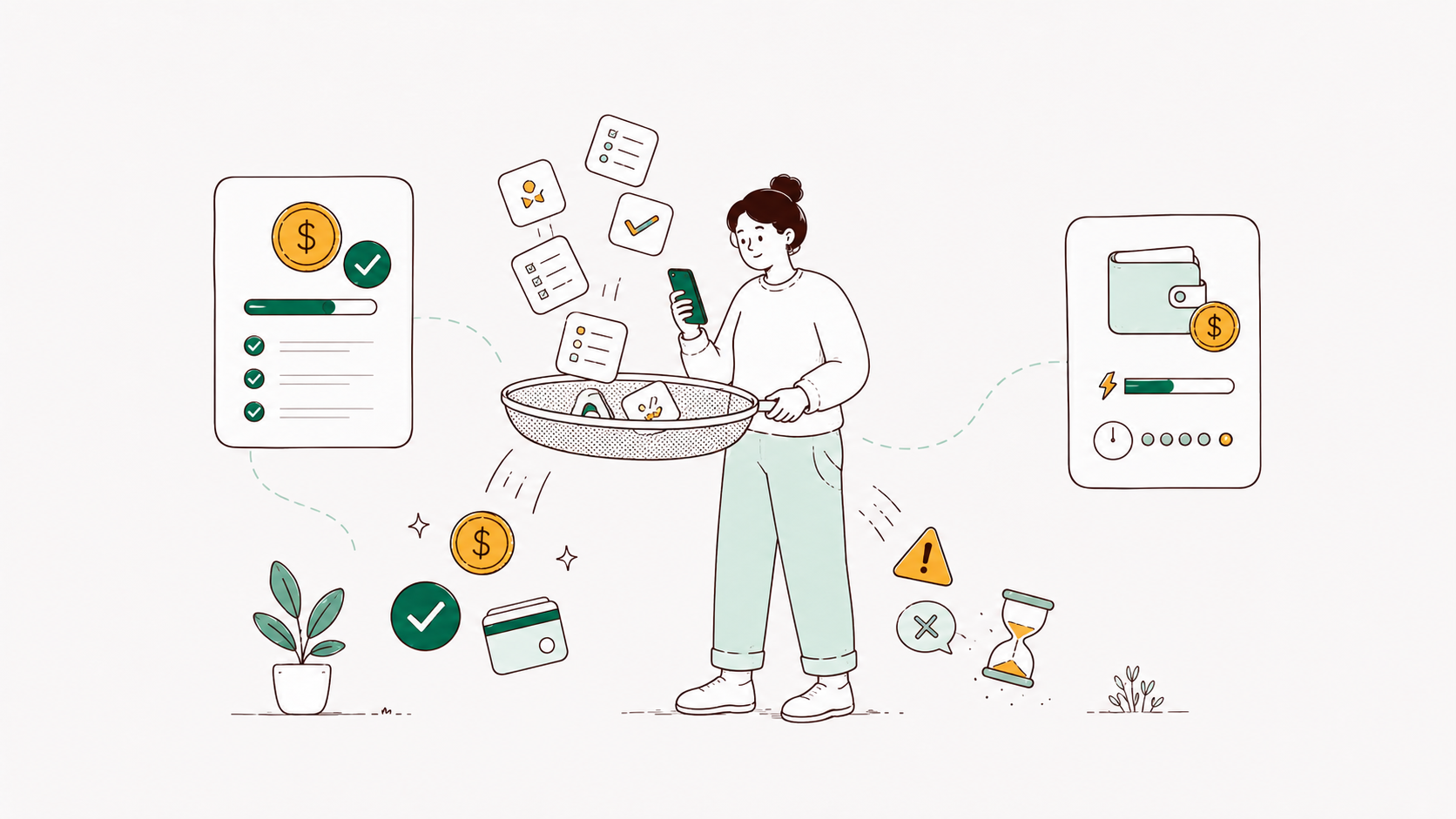
Legitimate survey apps earn by aggregating anonymized consumer opinions and reselling that market-research data to brands and research firms. Offer walls add a second revenue stream that keeps you earning when the survey queue empties, a model the adtech firm Mistplay breaks down in detail.
When you finish a survey, a brand has already paid to hear from people like you, and a slice of that budget becomes your reward. Offer walls work the same way, funded by companies paying for installs, sign-ups, or free trials.
That business model matters. Because the money comes from research and advertising budgets, your reward is already funded by the time you finish a single survey.
Where your rewards actually come from
Your rewards flow from those budgets straight to you, paid as cash or gift cards once you cash out. A genuine app never needs your money to pay you.
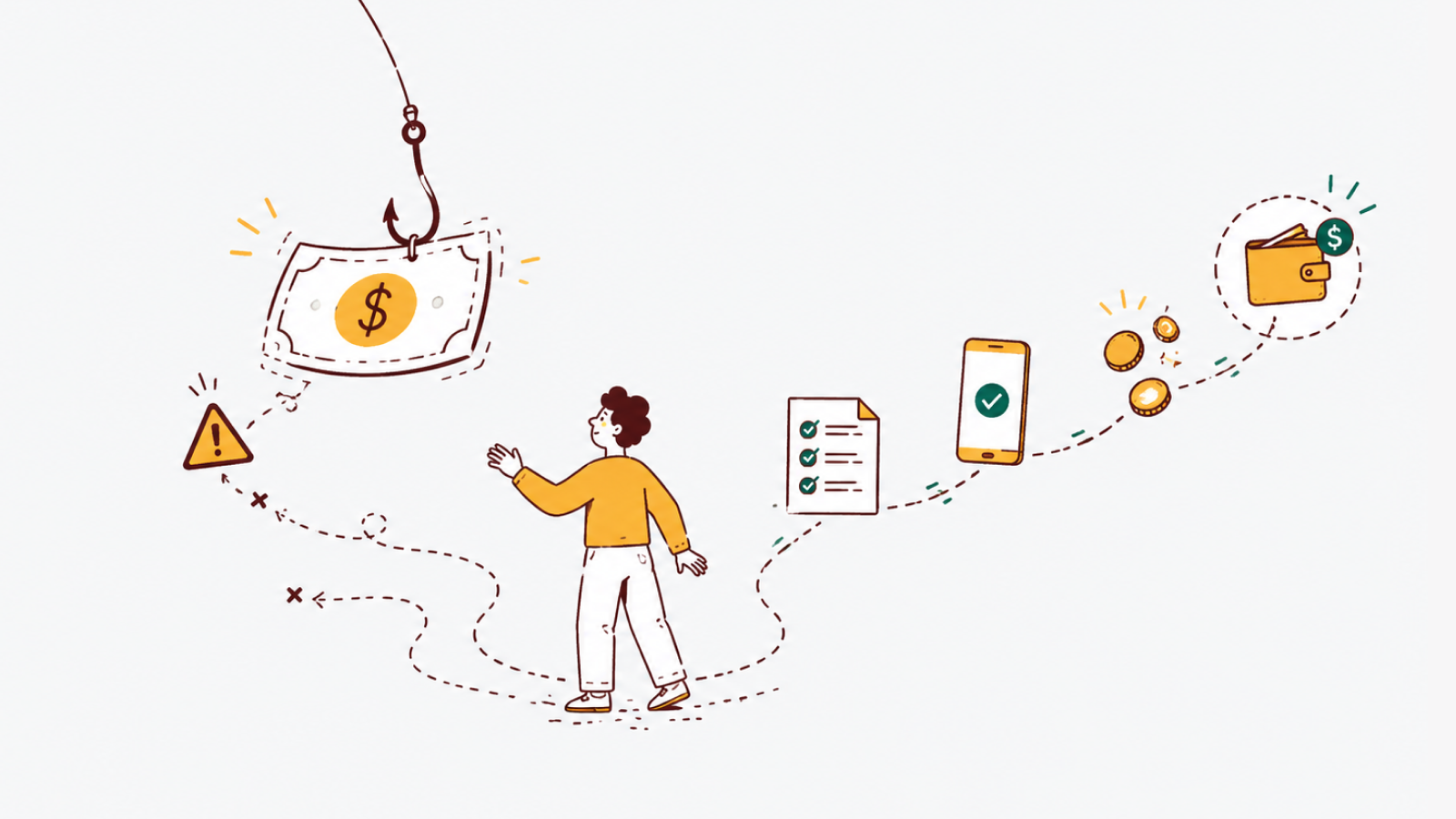
Scam apps run backward. With no real revenue source, they pay early "earnings" out of new users' deposits, which is why a fake eventually asks you to pay to "unlock" your balance, a pattern the FTC has flagged directly.
Are free money apps legit or a scam?
Both, depending on the app. Some are legitimate market-research reward apps that pay as promised, while many apps marketed as "free money" or "make money" are outright scams.
The scam side is large and growing. Business and job-opportunity scams accounted for $750.6 million in reported losses in 2024, per the same FTC report. Within that category, job and employment agency scam reports tripled from 2020 to 2024, while losses jumped from $90 million to $501 million.
Skepticism is the right instinct. The burden of proof sits with the app, though a few quick checks settle it fast.
How to spot a fake money app
The clearest sign of a fake is a request for your own money. A scam app asks you to pay a fee or deposit funds to "unlock" tasks or release a withdrawal, something the FTC's task-scam alert confirms real apps never do: never pay anyone to get paid.
These "task scams" have exploded, growing from zero reports in 2020 to about 5,000 in 2023 and roughly 20,000 in the first half of 2024 alone. By volume, they made up nearly 40% of job-scam reports in that period.
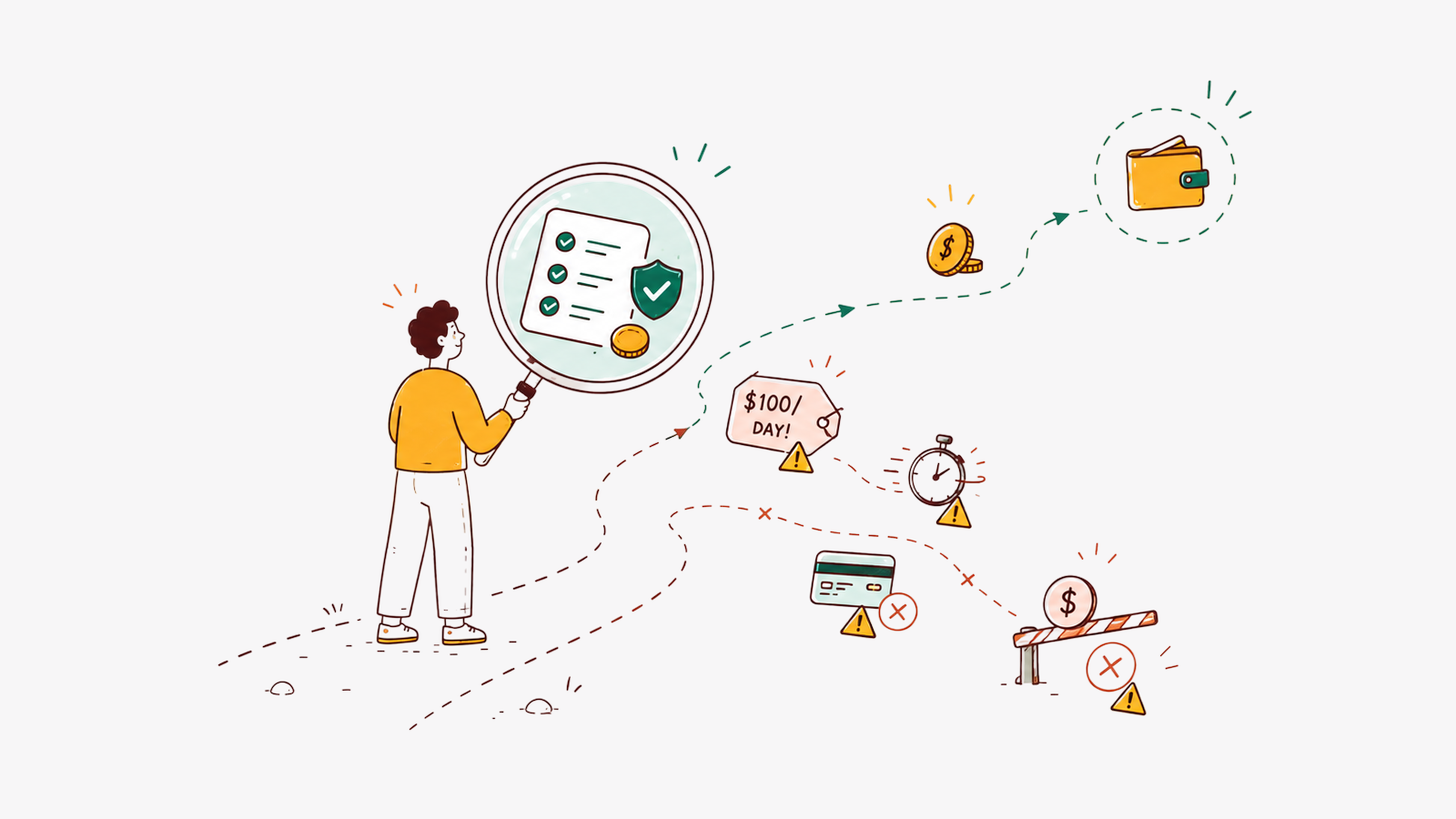
Run any app through this red-flag checklist before you trust it.
-
An upfront or "VIP" fee charged before you can earn anything.
-
Promises like "$100 a day" for tapping a button.
-
Requests for your SSN or a bank login before you've earned a cent.
-
A withdrawal minimum set so high you could never reach it.
-
Generic reviews that all shout some version of "just earned $500!"
-
No company name, address, or way to make contact.
Any single item is a reason to stop. Two or more, and you're almost certainly looking at a scam.
Do free money apps actually pay out?
Legitimate apps pay out reliably once you reach a low, clearly stated minimum, paid as real cash or gift cards.
The scam pattern looks different. A fake shows a big on-screen balance, then buries it behind a withdrawal wall of $200 or more that you can never clear.
How cash-out works
Real payout mechanics are refreshingly boring, and that works in your favor. On TopSurveys the cash-out minimum is $5, with instant withdrawals to PayPal alongside gift-card rewards rather than points that never convert.
Screenouts happen too, when a survey ends early because your profile doesn't match the study. TopSurveys pays a small amount plus a random reward when that occurs, so your time isn't wasted.
That low bar keeps the first payout within reach. You can create a free TopSurveys account and start answering surveys the same day.
Why honest apps can't guarantee exact earnings
No honest app can promise a specific payout on a specific day. Survey supply shifts with research demand, and your profile decides how many surveys you qualify for in any given week.
Any app that guarantees exact earnings is waving a red flag. Honest apps state a minimum, a payout method, and nothing they can't control.
How much can you realistically make?
Realistic earnings run from pocket change to a couple hundred dollars a month, scaling with the time you put in. Individual surveys pay roughly $0.50 to $3 each, with a rare survey paying up to $50.
Platforms themselves land in the same range when pressed. Swagbucks told CBS News that members can "reasonably earn an extra $50 to $250" a month, a platform's own ceiling worth reading as the optimistic end.
For context, about 36% of US adults run a side hustle, Bankrate found, and survey apps sit at the modest, no-commitment end of that spectrum. Pay per task stays low across the board, which is why honest apps frame this as spare-time cash rather than a wage.
Honest apps keep these figures grounded because the alternative invites regulators. The FTC sent more than $6.7 million back to consumers after a gig-work company made deceptive claims about potential earnings.
Apps that give you free money for signing up
Some legitimate apps offer a small welcome bonus, and a real one behaves predictably. You can withdraw it once you meet the normal, low cash-out minimum, the same as any other earnings.
A fake "bonus" works the opposite way. The app credits you a large sum on sign-up, then sets the withdrawal threshold so high that the money can never come out.
Watch for the deposit trap here too. If an app says you must add your own money to "activate" or "release" a sign-up bonus, that's the classic scam tell from earlier, not a real offer.
Treat a sign-up bonus as a nice extra, never the reason you pick an app. The cash-out rules matter far more than the headline number.
How to choose a free money app you can trust
Pick apps that pay real cash, state a low cash-out minimum up front, never charge you to earn, and name a real company you can contact. Those four traits filter out most junk before you waste a minute.
A survey-first rewards app like TopSurveys meets each of them, with real cash rewards, a stated $5 minimum, no pay-to-play, and a contactable company behind it.
The five-point trust checklist
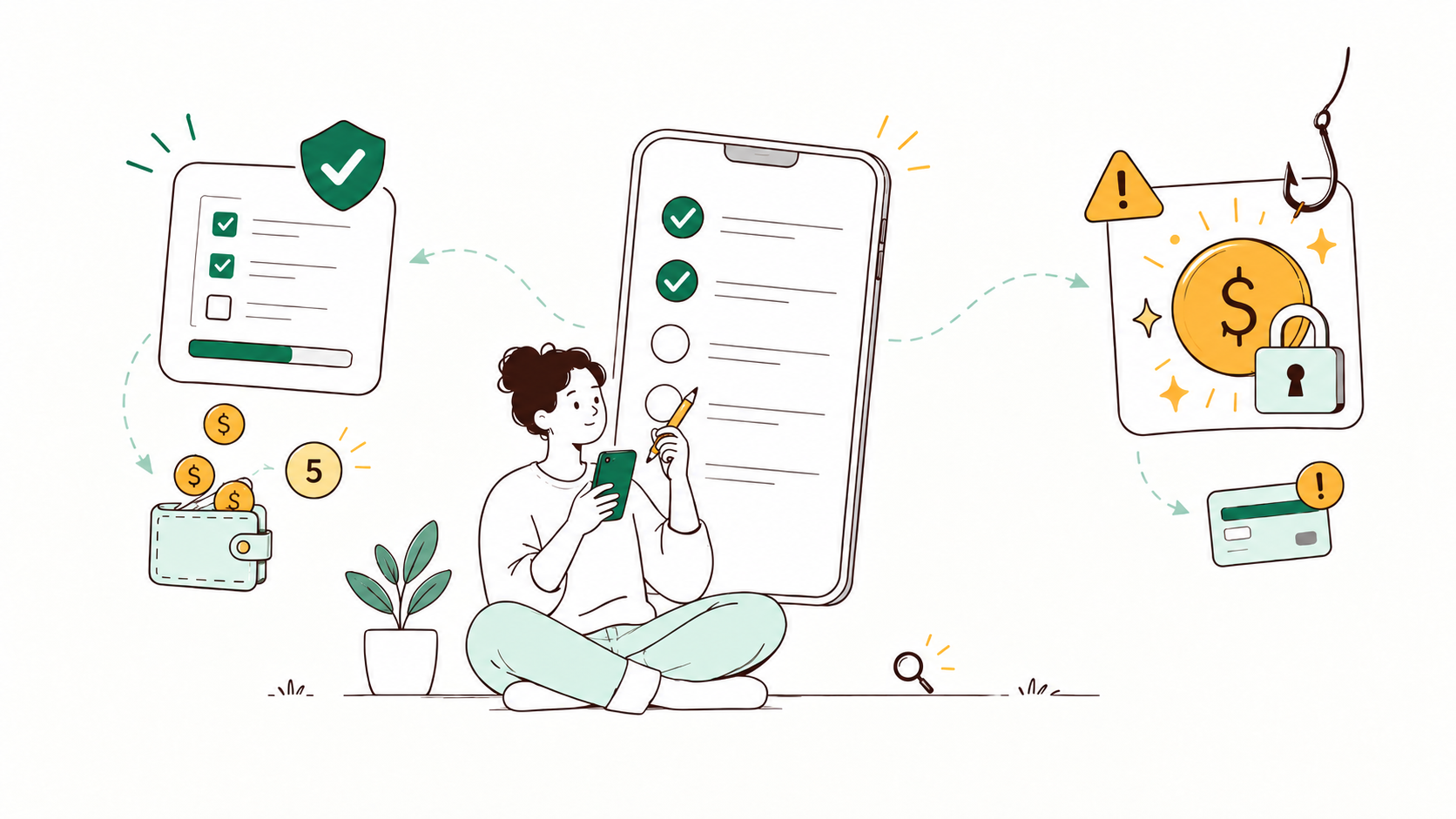
Measure any app against these five points before you commit.
-
Real cash and gift cards, not points that expire.
-
A low cash-out minimum shown up front, the way TopSurveys lists its $5 bar.
-
No charge to participate, at any stage.
-
Clear company details and a real way to make contact.
-
Honest earnings language, with no "$100 a day" promises.
An app that clears all five is worth your time; one that fails two is not.
Green flags a legit app shows
Beyond the checklist, a few green flags signal a trustworthy app. Clear payout thresholds, real support channels like a help center and email, and plain answers about how your data is used all point the right way.
Privacy comes down to the business model. A legitimate survey app earns by reselling aggregated, anonymized market-research opinions to brands, which is nothing like a scam demanding your SSN before you earn a cent.
Start earning with surveys you can trust
Legitimate survey-reward apps pay modest, real cash for your time, and the honest ones never hide the rules. Run any app through the five-point checklist before you install it, and walk away the moment it asks for your money instead of paying you.
To put that checklist to work, you can start earning with real surveys on an app that pays from a $5 minimum. Keep your expectations realistic, treat it as spare-time cash, and let the payouts prove themselves over your first few weeks.