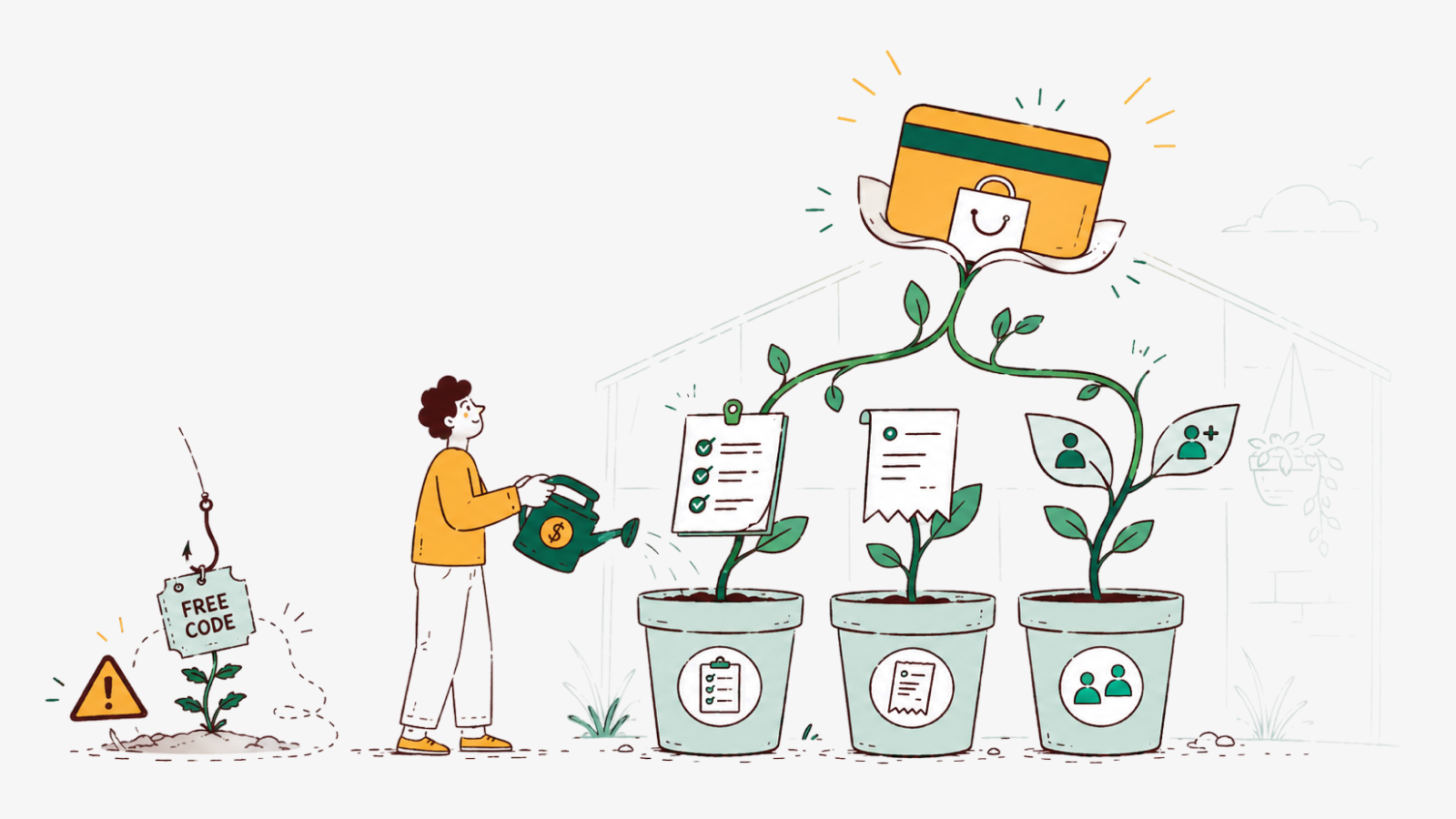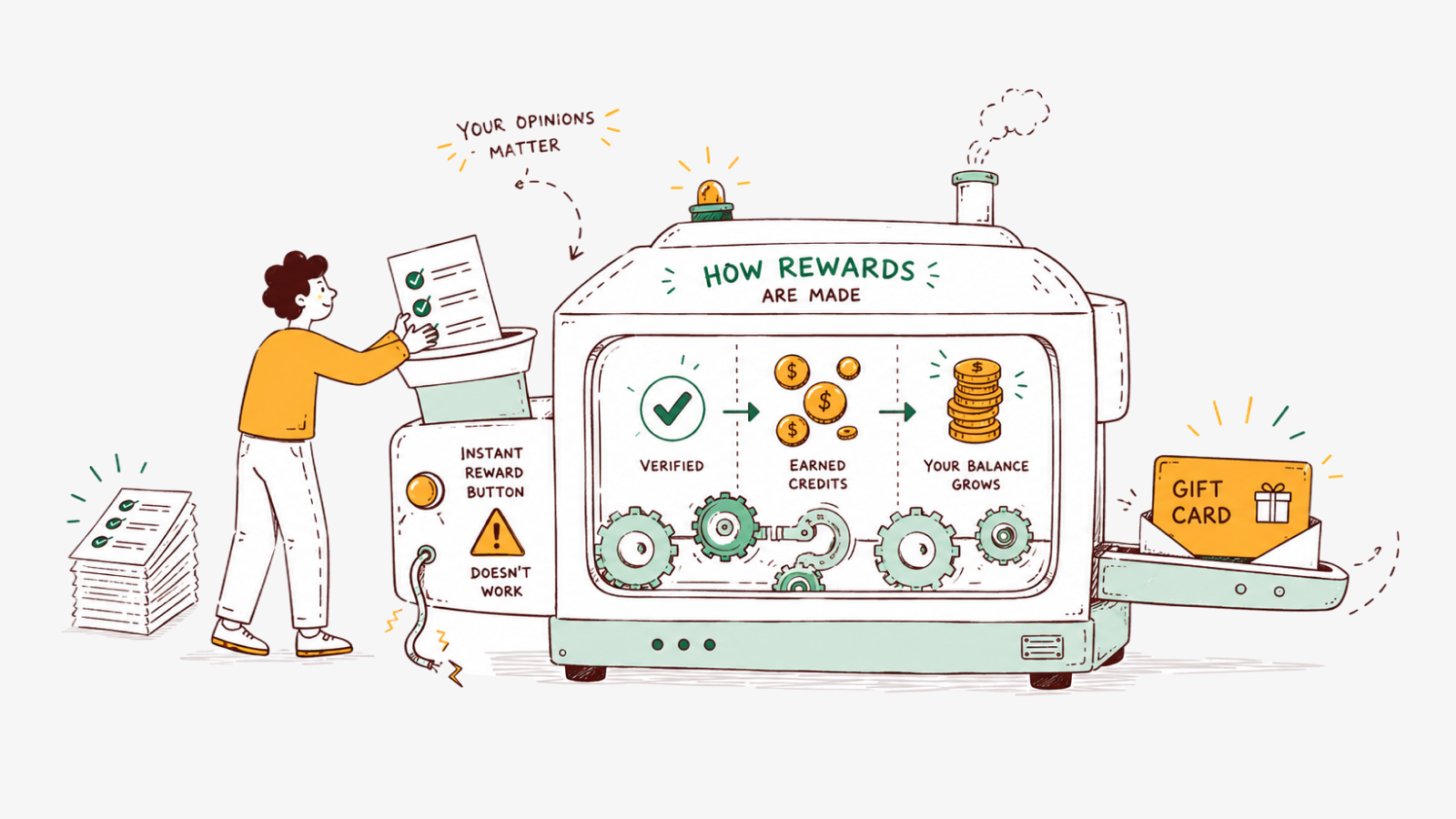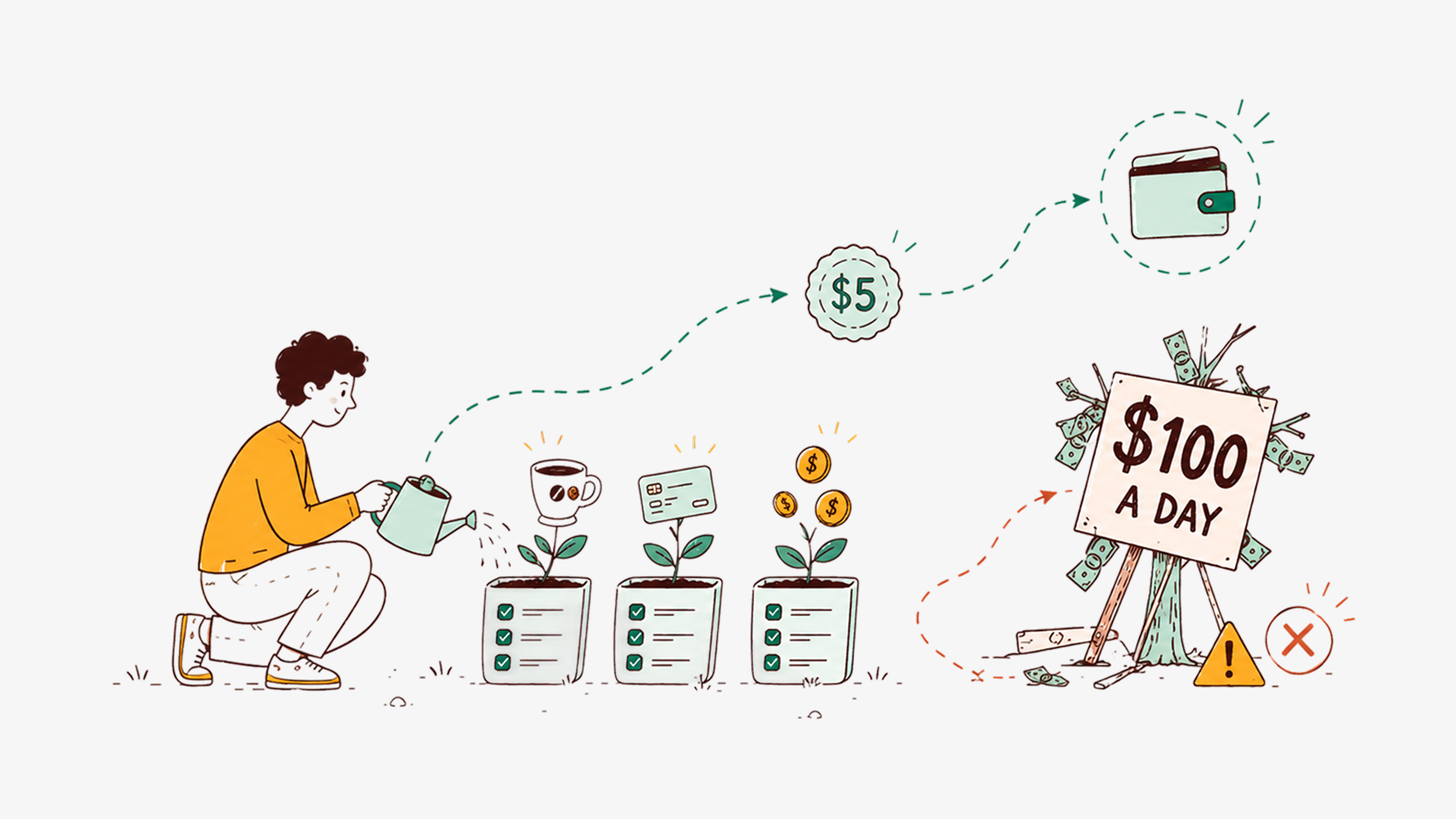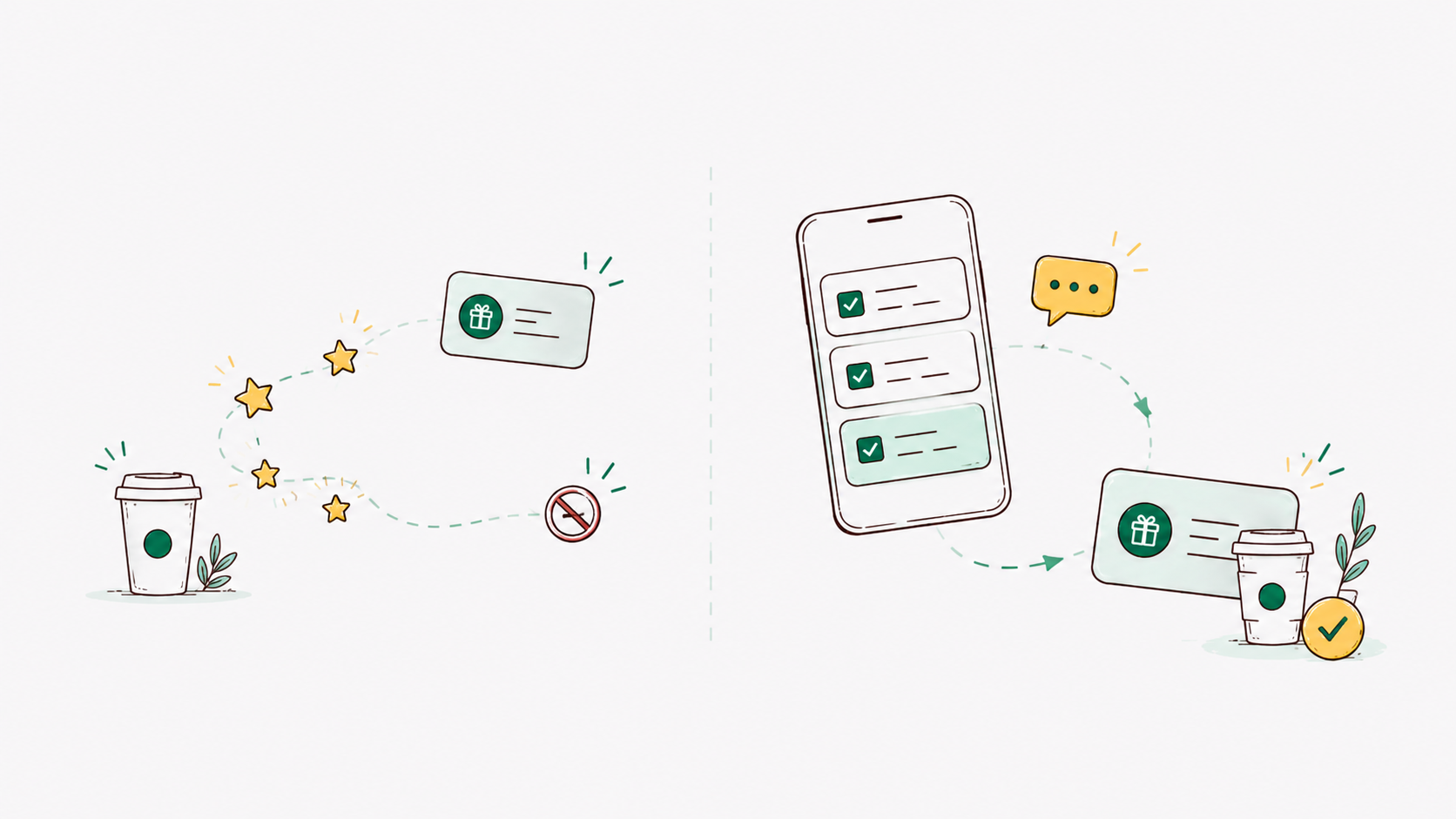
A free Starbucks gift card earned through paid surveys is real, and payment is what makes it work. Survey platforms pay for completed responses, then you take that balance as a Starbucks eGift or as cash you spend at the counter yourself.
"Free" here means you hand over no money. What you spend is time answering questions.
Starbucks Rewards Stars run on a track of their own, because the program excludes Starbucks Cards from Star redemption. Six steps stand between a new account and a $5 Starbucks eGift.
Are free Starbucks gift cards real?
Free Starbucks gift cards from surveys are real. Completed responses earn a credit you can withdraw, and Starbucks sits among the retailer eGifts in the reward catalogue.
Money moves through three hands before it reaches yours.
- Market-research buyers fund the whole chain, paying for answers from a specific kind of person.
- What reaches you is the remainder after the platform takes its cut, credited once you qualify and finish.
- Cashing out turns that credited balance into a Starbucks eGift, a different retailer's card, or plain cash.
That chain is also what separates a real reward from a con, since no legitimate reward charges you to claim it.
Readers who aren't yet sold on the category can start with whether paid surveys are legitimate at all. For the payment chain in detail, how survey rewards turn into gift cards covers it in full.
Why your Starbucks Stars can't become a gift card
Stars and Starbucks Cards are two different currencies inside the same program. A Star balance buys menu items at the counter, while a gift card is stored value the program treats as ineligible for Star redemption.
What the Starbucks Rewards terms say about Stars and cards
Starbucks Cards sit on the exclusion list for Star redemption. The program terms effective March 10, 2026 say Stars are "ineligible to be redeemed for the following items".
Named on that list are "Starbucks Cards (such as activations, reloads, transfers, and other card-to-card transactions)". Delivery orders and items sold on Starbucks e-commerce sites appear on the same list.
The US Star redemption ladder
The US ladder runs six tiers and tops out at 400 Stars, with rungs at 25, 60, 100, 200, and 300 below it. A maximum pre-tax value appears in the program terms for the four tiers at 100 Stars and above.
| Stars | What it redeems for | Pre-tax cap |
|---|---|---|
| 100 | Brewed coffee or tea, a bakery item, or a packaged snack | $6 |
| 200 | Any handcrafted beverage, or a hot breakfast item | $10 |
| 300 | A packaged salad or lunch sandwich, a protein box, or packaged coffee | $16 |
| 400 | Select merchandise, or a packaged Starbucks Reserve coffee | $20 |
Published caps stop at $20 pre-tax, on the 400-Star tier. The two rungs below 100 Stars publish a flat discount instead of a covered item.
At 25 Stars that discount is $1 off a beverage modifier, such as an added espresso shot, syrup, or sauce, and the terms allow it only as a customization to a base beverage rather than as a drink on its own. The 60-Star rung takes $2 off a qualifying item in your order.
How much is 6,000 Stars worth?
There's no published value, because 6,000 Stars isn't a redemption tier. The ladder ends at 400.
What that balance buys is repeat trips to the top of the ladder.
| Route for 6,000 Stars (multiplied out from the published tiers, not a Starbucks valuation) | Result |
|---|---|
| Spent at the 400-Star tier | 15 redemptions capped at $20 pre-tax each, so about $300 of menu items at most and none of it loadable onto a gift card |
| Spread across the 200-Star tier | 30 handcrafted beverages |
| Taken as a gift card by either route | Not available, since cards sit on the exclusion list |
Reaching that balance at Green status means $6,000 of qualifying spend, since Green members earn one Star per dollar under the program's earn rates. Green Stars also expire six months after the calendar month they were earned, which makes a balance that size unrealistic.
Pushing the expiry date back takes a qualifying purchase, a Reward redemption, or a $30 digital reload in the month before it, and each one buys a single extra month. Sitting on 6,000 Stars therefore means Gold or Reserve Level, where Stars don't expire while you hold the status.
How to get a free Starbucks gift card with surveys
The route runs six steps, and the reward choice comes at step five. Beginners can pick up the fundamentals in Paid Surveys 101 first.
- Pick a platform that pays real currency and publishes its cash-out floor where you can read it before registering. A platform that hides the floor behind a signup form is not worth the profile questions.
- Fill in the profile questions honestly, because matching depends on them and inconsistent answers get flagged.
- Work through surveys with the stated length and payout visible, and skip the long ones that pay least. Payout per minute matters more than the size of any single payout.
- Reach the cash-out threshold. Check whether it applies to your whole balance or to each reward separately, because the two rules land differently on a small total.
- Choose the reward, either a Starbucks eGift or cash you spend at Starbucks yourself. Cash is the more flexible of the two, and the same approach applied to Amazon is written up separately.
- Register the eGift to a Starbucks account with its 16-digit card number and security code.
What a $5 Starbucks card costs you in survey time
Two to 10 surveys cover a $5 reward at the published per-survey rates. Standard surveys pay $0.50 to $3 each, averaging $5 to $15 an hour if you're selective about which ones you accept.
No survey app can promise a set amount, because the total moves with which surveys you accept and how many of them you qualify for. Your effective rate also absorbs the minutes lost to screeners that go nowhere, so a short survey with a simple screener can out-earn a longer one that pays more on paper.
- Ten surveys at the low end of that band reach $5.
- Land the $3 studies and two completions cover it.
- Measured in time, that's 20 to 60 minutes of qualifying survey work, spread across however many sittings you want.
Academic research platforms set a higher floor than consumer panels. Prolific sets a minimum of $8 an hour for participants and asks researchers to aim for $12.
Screening for which studies actually pay more moves your effective rate further than extra hours do. The top of that per-survey band pays six times what the bottom pays.
Why surveys screen you out, and what that costs you
Studies target narrow populations, which makes ineligibility the normal outcome. Incidence rate is the share of screened people eligible for a given study, and the narrower the target, the lower that share.
Kantar's own example: a study looking for men aged 18 to 34 who own a Tesla runs an incidence rate near 1 percent, which is why the same person gets screened out again and again.
Kantar puts incidence rates for the narrowest targets at 1 to 5 percent, against far higher shares for broad consumer studies. Screeners sit at the front of a survey, before any paid question.
The questions you answer before a disqualification still take real minutes. That time goes unpaid unless the platform credits screenouts.
TopSurveys credits a screenout payout plus a random reward when a survey ends early. Filters for best match, short surveys, and highest payout share one screen, which is where the payout-per-minute call gets made.
Which surveys actually pay out in Starbucks gift cards?
Platforms that pay real currency and list retailer eGifts in their reward catalogue do. Confirming that pairing takes two pages on the platform's own site, the reward catalogue and the cash-out terms.
What a legitimate survey platform looks like
Every signal worth checking sits on the platform's own public pages, none of them behind a signup wall. In the catalogue, look for Starbucks named at the $5 or $10 denomination, since retailer lists rotate without notice.
- Who operates the platform is named on the site, and so is a way to contact them.
- Registration starts from the platform's own homepage.
- Look for the cash-out floor in writing on a public page before you register.
- Balances are quoted in currency, so you can see what each survey paid.
- Length and payment appear before the first question loads.
Cash-out rules worth checking first
Prolific holds participants to a $6 floor across their combined approved balances. Any platform with a $5 floor sits at the low end of the market, and for a single $5 card that minimum matters more than a headline hourly rate.
- Minimum cash-out sets how many surveys stand between you and a reward.
- Check that PayPal or a retailer eGift is on the payout list before you start earning.
- On a $5 balance, a flat fee or a currency conversion costs proportionally more than on a $50 one.
Payout speed, and what to check before you sign up, gets its own guide. For the eGift-versus-cash decision, the wider playbook for earning gift cards weighs both sides.
The Starbucks gift card scams to walk away from
Any unsolicited offer promising a Starbucks card is a scam, identifiable by the one fact that you never went looking for it in the first place. Two shapes of that offer dominate the search results, and the nine red flags that mark a survey scam cover the pattern behind both.
Free codes, numbers, and generators
No working Starbucks card number can be generated, and none sits posted on a forum waiting to be claimed. A number only works when a funded card stands behind it.
That funding comes from a purchase, so a generator page has nothing to draw on. Pages ranking for those searches are generators, redeem-code listings, and image-board posts, and every one of them wants your email address and your card details.
A supposed gift-card win is one of the standard openers the FTC catalogues for harvesting personal details, alongside a discount code to a local store. What follows the opener runs in the same order every time.
- The form comes first, asking for personal details against a code promised later.
- Then you are asked to "verify" yourself with financial information, which no real gift-card code requires.
- Last, a small fee appears to release a card that was never funded.
The sequence ends with the payment request, the mark of any prize scam.
The fake survey text that promises a card
A survey you never signed up for, arriving by text and promising a card, is a scam. The seasonal version poses as a customer survey from a business you already recognize.
The message reads like a two-minute customer survey with a card at the end, arriving from a number nobody in the household recognizes.
- A real retailer asks permission before texting you anything.
- Two minutes of work would never earn a reward that size.
- The operator, the purpose, and the destination of your answers all stay vague, and the link resolves to a domain with no company behind it.
Click the link, and it lands on a third-party page rather than the store's own site. A form asking for your full name, address and email is the actual goal, and the same click can drop malware on your device.
The FTC's Consumer Sentinel network logged 41,120 fraud reports in 2024 naming a gift card or reload card as the payment method. Published beside that count is a $212 million loss total, built from the narrower set of reports where the consumer named a loss between $1 and $999,999.
Can you get a free Starbucks gift card without surveys?
Not as a card. The loyalty route hands you free drinks instead, and Starbucks Rewards ties Stars to qualifying purchases, which makes the program a discount on spending you already do.
Redemptions come out as menu items credited against your account. Reaching even the 100-Star tier means $100 of qualifying spend at Green status, with the 400-Star tier costing four times that.
Loyalty status changes the earn rate and nothing else about the reward. Reaching either tier still starts with spending money at Starbucks.
- At Gold Level the rate rises to 1.2 Stars per dollar.
- Reserve Level, the top of the three, pays 1.7 Stars for the same dollar.
- Neither rate changes what a redemption produces, which is still a menu item inside its tier cap.
Where to start if you want a Starbucks eGift
At $5 the choice is between a Starbucks eGift and cash. Both buy the same drink, with the eGift arriving as a code you register to a Starbucks account.
One platform is enough to test the route. Add a second only after the first has paid out once.
- Pick the platform on its published cash-out floor, not on its ad copy.
- Profile answers that match your real life are what get surveys sent to you.
- Get a first $5 into the account before the eGift-versus-cash question matters.
The 20 to 60 minutes behind a $5 card can spread across a week of odd moments, or land in one sitting. More reward routes are collected under Free Gift Cards & Rewards.