Teens can earn with paid surveys, and the exact age rule depends on the site. Some panels accept members from 13 and encourage teens to get a parent's permission, others run parent-managed accounts for minors, and many stay strictly 18 and older.
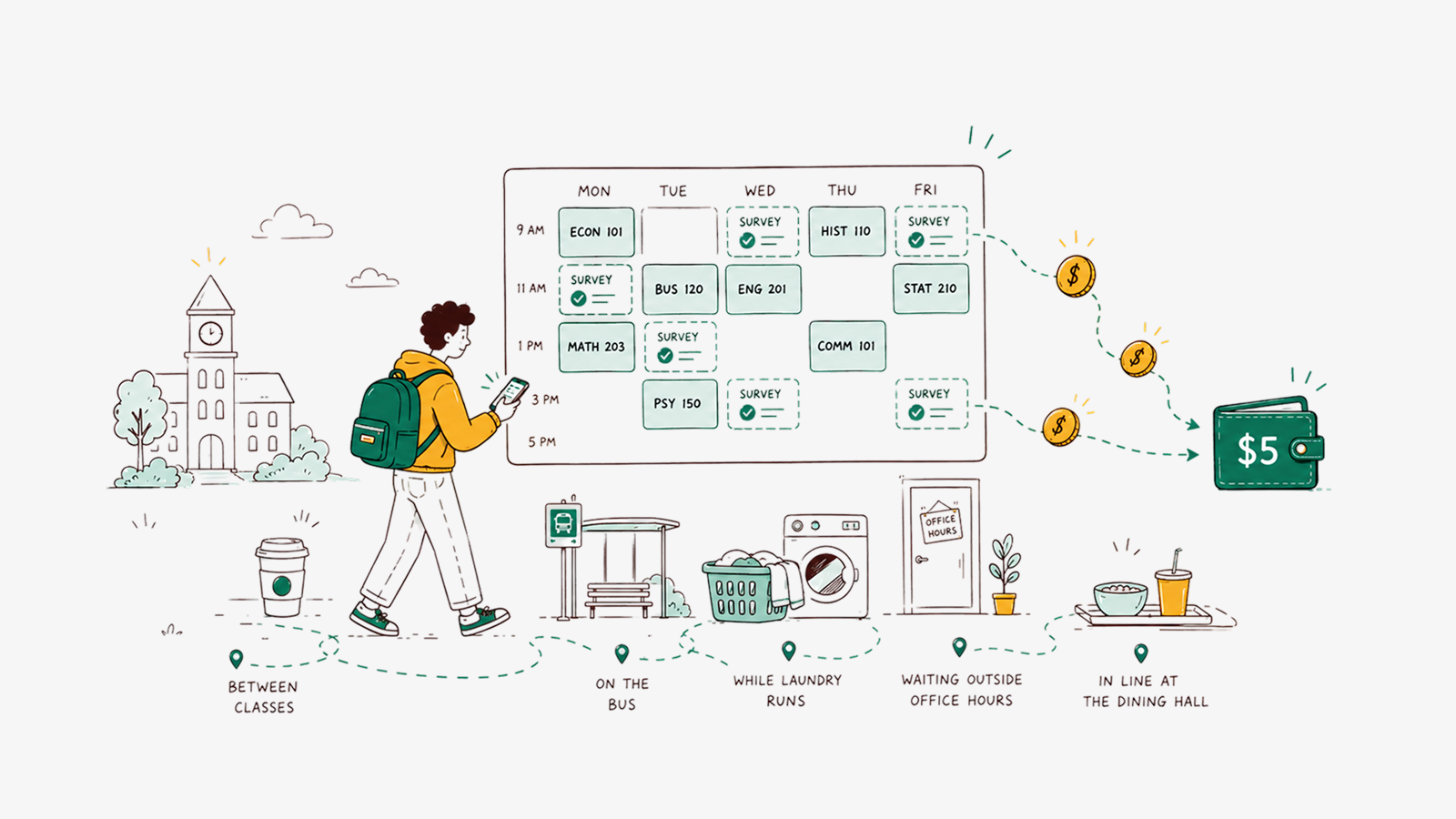
Sharing opinions pays real pocket money rather than a salary. A single survey typically pays from under a dollar to a few dollars, so it works best as spending money earned in spare minutes.
Cash-out is where it gets tricky, because the big payment services set their own age limits. PayPal requires holders to be 18, so teens collect gift cards or use a parent's account instead.
Can teens actually do paid surveys?
Plenty of sites accept teens, and the established ones either build a parent into the account or encourage permission first. The rule shifts from site to site, so check the age gate before you register anywhere.
Swagbucks accepts members from age 13 and encourages anyone under 18 to get a parent or guardian's permission before registering.
Branded Surveys accepts members from 16 in the US, and younger teens can only take part through a parent's account. Other well-known names stay fully 18 and over, including Survey Junkie and Google Opinion Rewards.
| Platform | Minimum age | Under-18 rule |
|---|---|---|
| Swagbucks | 13 | Parental permission encouraged for under-18s |
| Branded Surveys | 16 | Under-16s only via a parent's account |
| Panelpolls | None (parent-managed) | Parent creates the account and adds the child |
| Survey Junkie | 18 | Not open to under-18s |
| Google Opinion Rewards | 18 | Not open to under-18s |
Age minimums come down to privacy and payment rules rather than anything about the surveys themselves.
Which survey sites let teens sign up?
The realistic options split into two camps: sites like Swagbucks that accept teens directly, and parent-run panels such as Panelpolls where the adult holds the account.
It also pays to know which popular sites stay 18 and over, so nobody wastes time on a sign-up that won't work.
Sites teens can join with a parent involved
A handful of established panels welcome under-18s, and a parent's sign-off is either built into registration or strongly encouraged. Either way, getting a parent involved from the start is the right move.
-
Swagbucks takes members from age 13 and encourages under-18s to get a parent's permission first.
-
Branded Surveys accepts 16 and 17 year olds as members, and younger teens can take part only through their parent's account.
-
Panelpolls runs on a parent-managed model, where the adult creates the account, gives consent, and receives the survey invitations for their child.
That parent-managed setup builds consent in from the start and gives an adult a clear view of what the teen shares and earns.
Consent is also the norm most families expect. Pew Research found that 81% of US adults favor parental consent before minors create social media accounts, compared with 46% of teens.
Sites that require you to be 18 and up
Some of the biggest survey names won't accept anyone under 18. Survey Junkie requires members to be 18 or older and to live in the US, Canada, Australia, or the UK, and Google Opinion Rewards applies the same age floor across its eligible countries.
That group includes TopSurveys, a survey-first rewards app for users 18 and older that pays out via PayPal, bank transfer, or gift cards, with instant withdrawals from a $5 minimum. It's worth remembering for the day you turn 18, though it isn't an option before then.
Being under 18 today doesn't rule these sites out forever. A parent who already qualifies can hold the account, and the cash-out choices further down explain how the money reaches a teen.
How much can teens realistically make?
Expect pocket money rather than an income. According to CBS News, Survey Junkie says members can earn as much as $40 a month by completing three surveys a day. Swagbucks says most members make $1 to $5 a day, and that an extra $50 to $250 a month is reasonable with more time invested.
Those are the companies' own figures, so treat them as ceilings rather than averages. Real totals swing with how many surveys you qualify for and how much time you put in, and Survey Junkie itself tells members that surveys won't make them rich and aren't a stand-in for a job.
What a single survey pays
A typical survey pays less than a dollar at the low end and a few dollars at the top, with the exact amount tied to length and how detailed the questions are. Branded Surveys says most of its surveys pay between $1 and $3, and Google Opinion Rewards pays varying amounts of Google Play credit depending on survey length.
Longer studies and focus groups pay more, but they show up less often and screen people out more aggressively. Short daily surveys make up most of what a teen will actually see.
| Site or type | Typical per-survey pay | Notes |
|---|---|---|
| Branded Surveys | $1 to $3 | Occasional higher-paying opportunities |
| Google Opinion Rewards | Varies by survey length | Android pays in Google Play credit |
| Longer studies or focus groups | Higher, but occasional | Harder to qualify for |
What surveys add up to in a month
A consistent teen is realistically looking at somewhere between pocket change and a couple hundred dollars a month, based on the platform figures above. Three short surveys a day is the kind of pace behind Survey Junkie's $40-a-month figure.
Your monthly total moves with a few things:
-
Survey availability changes daily, so some weeks simply offer more to do.
-
Screen-outs cut into earnings when you don't fit a study's target group.
-
Time invested is the biggest lever, since more short sessions mean more completed surveys.
How do teens actually get paid?
Most teens get paid in gift cards or through a parent's account, because the major cash services set their own age limits. PayPal, for instance, requires account holders to be at least 18 or the age of majority in their state, which rules out a direct transfer to any teen.
Google Opinion Rewards works around that by paying Android users in Google Play credit and iOS users through PayPal, though those credits expire one year after you earn them.
The realistic cash-out routes for a minor come down to three options:
-
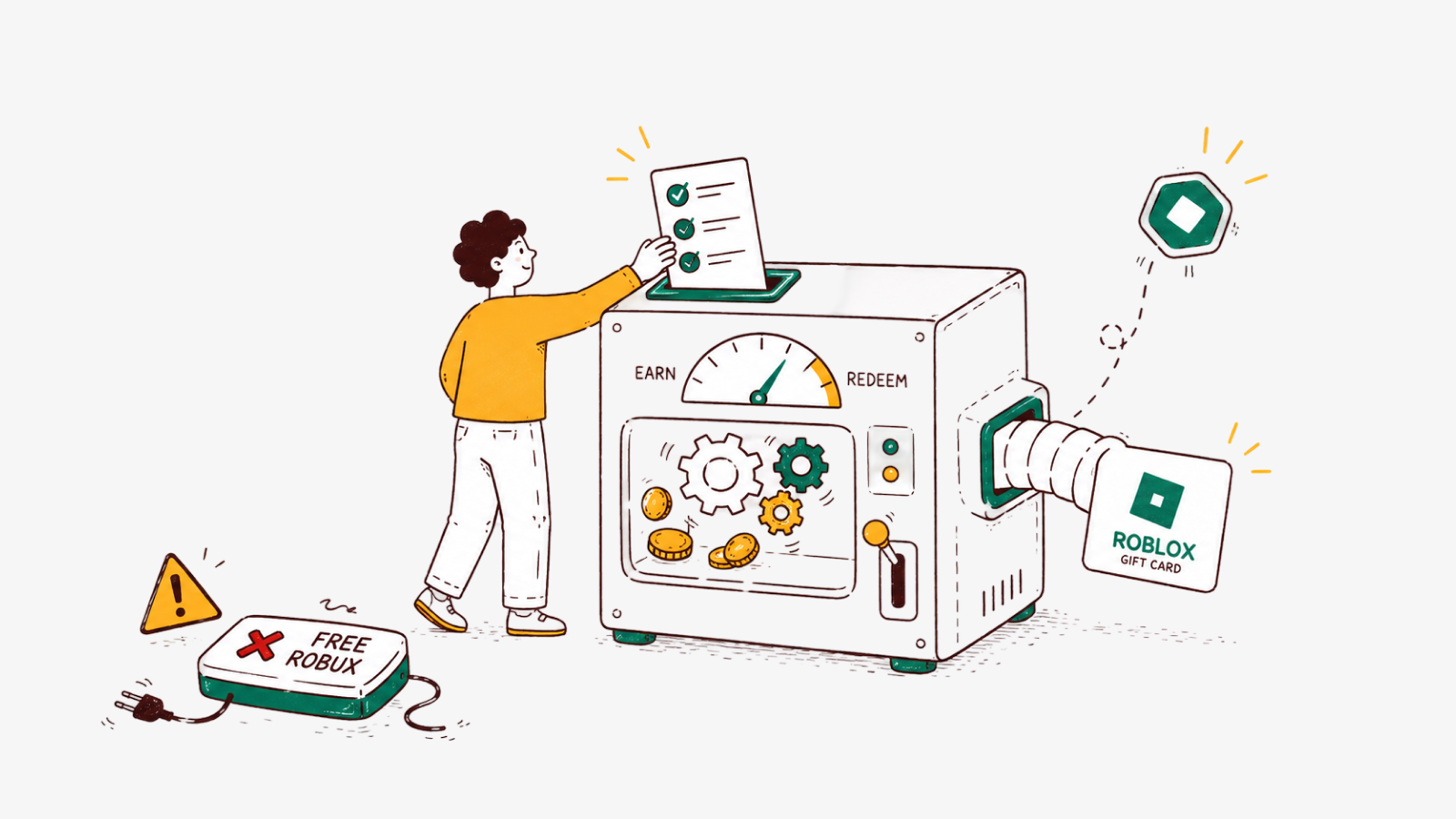
Gift cards to retailers like Amazon are the most common choice, since they don't need the recipient to hold a PayPal or bank account.
-
A parent's account can receive the money when the site and the payment service both require the account holder to be 18.
-
Google Play credit reaches Android users of Google Opinion Rewards directly, with PayPal reserved for the iOS side.
Readers who are already 18 or older can create a free TopSurveys account and cash out instantly via PayPal, bank transfer, or gift cards from a $5 minimum. For anyone younger, a gift card or a parent-run account stays the right call.
Is it safe and legit for a minor?
Paid surveys are safe for a teen who sticks to established panels that never charge to join and clearly explain how they handle data. Scam sites and sloppy data sharing cause the real trouble, not the surveys.
How to spot a survey scam
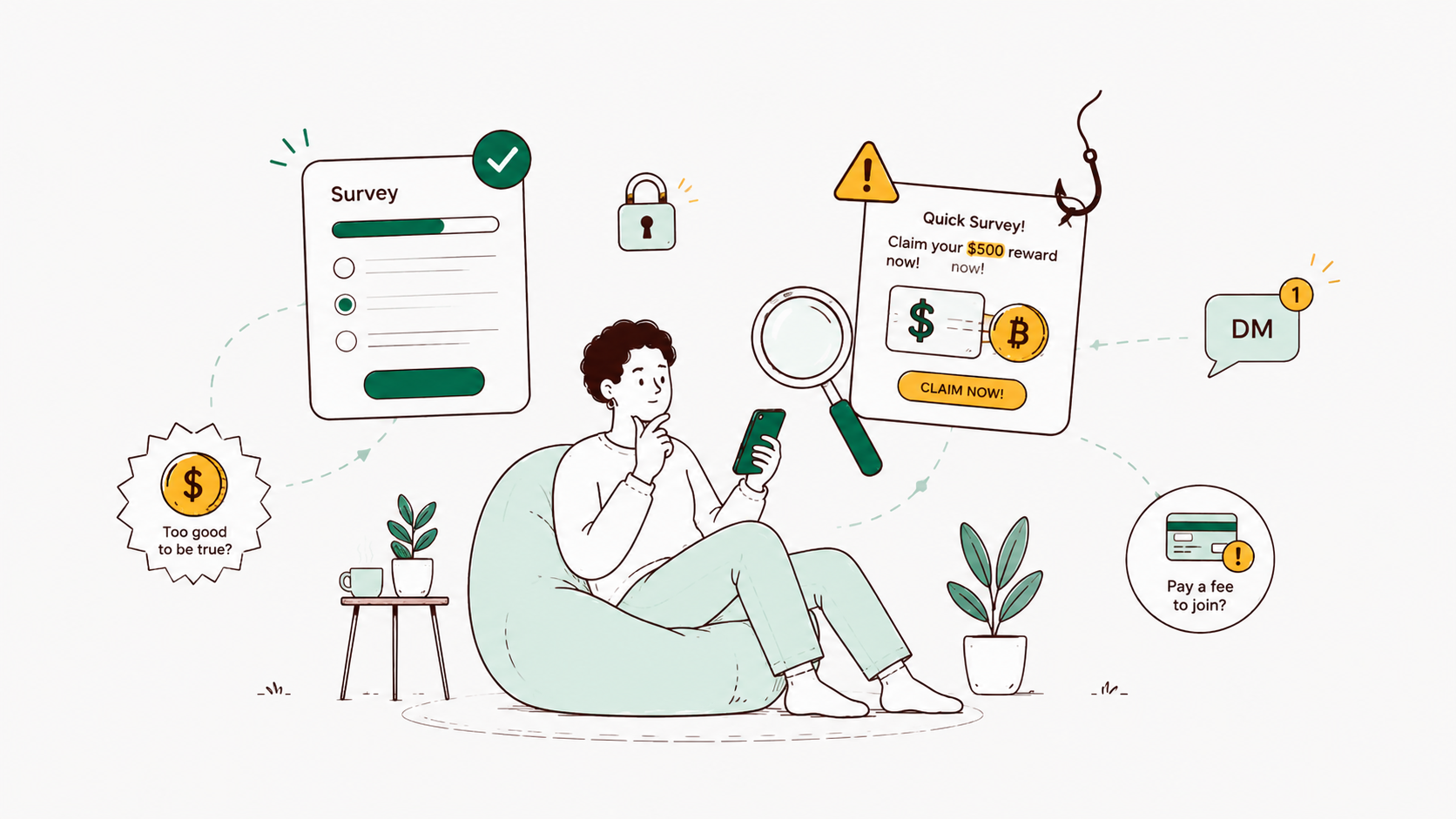
A few warning signs give away almost every survey scam in seconds. Legit panels don't charge a fee to join, and they have no reason to ask for your Social Security number or bank login just to mail a gift card.
The scale is worth taking seriously. The FBI's complaint center logged 15,782 online scam reports from people 19 and younger in 2022, with losses of $210.5 million, more than double the year before.
Social media is now the top launchpad for these schemes. Nearly 30% of people who lost money to a scam in 2025 said it started there, adding up to $2.1 billion in reported losses.
Watch for these tells before you register or click:
-
Upfront fees or a membership charge to reach the surveys.
-
Guaranteed income, or per-survey pay that sounds far too high.
-
Requests for a Social Security number, photo ID, or bank password.
-
Pressure to switch to WhatsApp, Telegram, or text for instant payment.
The FTC treats those unexpected chat-app offers as a textbook money-making scam. A real panel keeps everything on its own site and app.
How a teen's personal data is protected
Legit sites follow privacy laws that put a parent in charge for younger children and limit how a teen's data gets used. Under COPPA, an operator must get verifiable parental consent before collecting personal information from a child under 13.
The rules tightened in 2025. The FTC finalized a COPPA update that requires separate parental consent before a company can pass a child's data to third parties for targeted ads, and it capped how long that data can be kept.
For under-13s, COPPA hands parents real control:
-
Consent must come first, before a site collects any personal information.
-
Parents can review the data a site has gathered and ask for it to be deleted.
-
Companies may keep that data only as long as it's reasonably needed.
For a teen, that means a trustworthy panel shows a clear privacy policy, spells out what it collects, and lets a parent step in. Anything vague about data handling is a reason to walk away.
What parents should know before saying yes
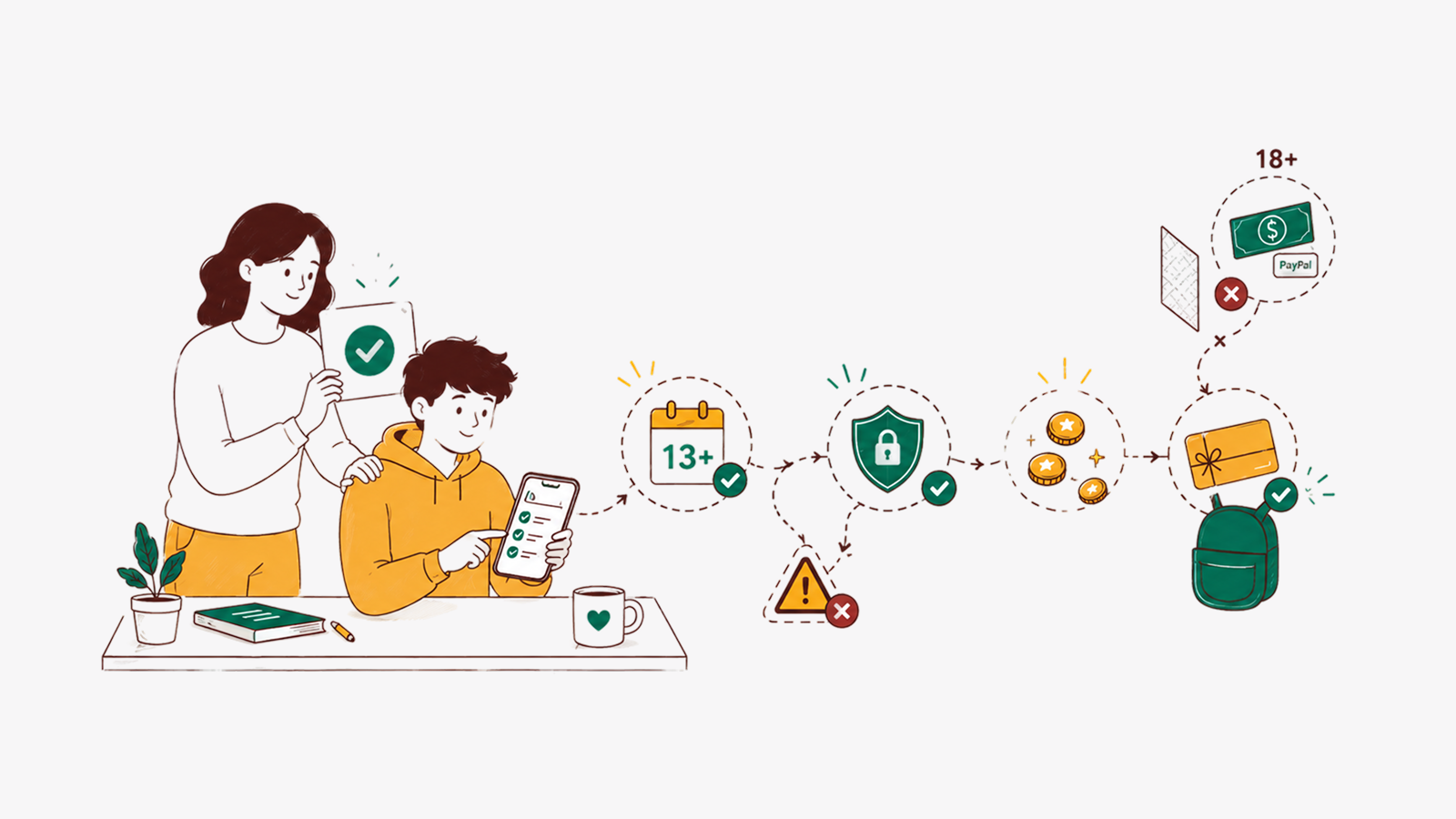
The safest setup keeps a parent on the account, whether the panel is parent-managed or simply registered together. Pair that with a clear privacy policy and an agreed cash-out method, and an adult stays in the loop on both the data and the money.
Parent-managed panels like Panelpolls are built for exactly this, since the parent creates the account and receives the invitations, so consent and oversight are part of the design.
Before saying yes, a quick setup checklist helps:
-
Choose a site that clearly allows the teen's age.
-
Register with a parent email so account controls stay with an adult.
-
Agree on a payout method, whether that's gift cards or a parent-held account.
-
Read the privacy policy to confirm what data is collected and why.
-
Review the scam tells above together before the first survey.
Where a teen should start with paid surveys
Start with one age-appropriate site rather than signing up everywhere at once. A single account you set up properly beats five you rushed through.
Set it up with a parent, pick a gift-card cash-out, and give it a couple of weeks of short, steady surveys before deciding whether it's worth your time.
A few first steps keep it simple and safe:
-
Pick one site that clearly allows your age, such as Swagbucks for 13 and up.
-
Register with a parent so consent and controls are covered.
-
Choose gift cards as your payout to sidestep the 18-and-over cash rules.
-
Complete a few short surveys first to see how screen-outs and payouts work.
Two safety rules never bend. Paying to join is always a scam sign, and no legit panel needs your Social Security number or bank login. Keep those in mind and paid surveys stay a safe, small way to earn spending money.