
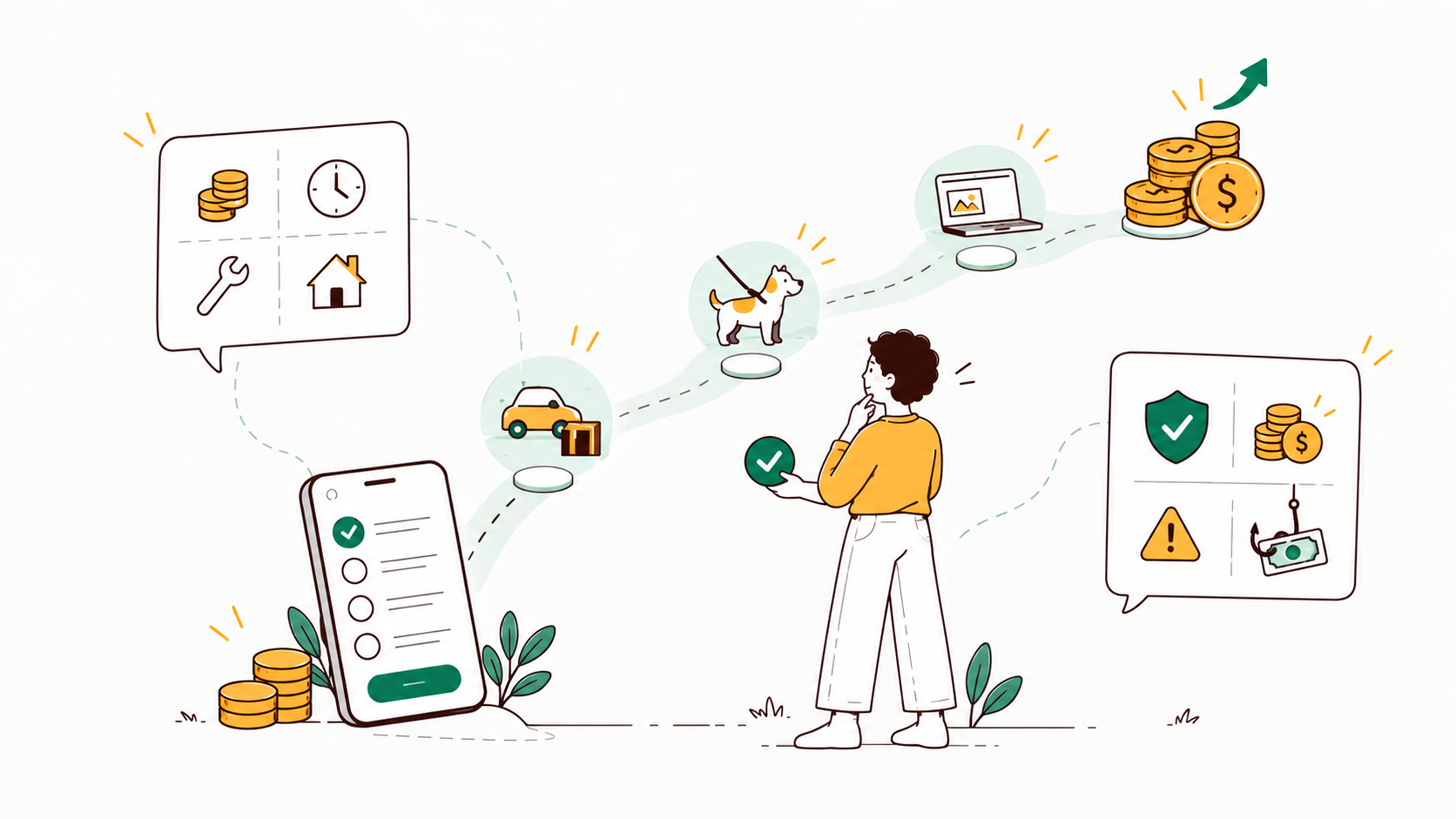
The best side hustle ideas for 2026 fit your time, your skills and whether you want to work online or in person. They run from low-effort survey and rewards apps through gig delivery, freelancing, online tutoring, content creation, pet care, reselling and selling digital products.
Most side hustlers earn modest money, and a handful of high earners skew every average you'll read about. This list leads with realistic earnings, cited wherever a reliable benchmark exists, rather than the best-case numbers most roundups promise.
For every idea you'll see what it pays, what it costs to start and how soon the first money arrives. They're ordered from the fastest options to start toward the ones with the highest earning ceiling.
How much side hustle income is realistic in 2026?
The typical side hustle earns about $200 a month, down from $250 in 2024. Around 28% of side hustlers make just $1 to $50 a month, which is why the median is the more useful number here.
A few high earners pull those averages well above the middle, even as typical earnings slip year over year. One LendingTree survey of the 33% of Americans with a side gig put average earnings at $1,242 a month, more than six times the $200 median and far above what the middle earner takes home.
- Bankrate finds about 27% of US adults now run a side hustle
- The median clears roughly $200 a month
- Reported monthly averages range from $885 to $1,242
Treat each figure as a realistic range rather than a promise. Results vary with the hours you put in and your local market.
None of these ideas pay you for doing nothing. Even the small end counts, since you can turn spare-minute earnings into Cash App money and spend it the same day.
How the 2026 side hustle ideas compare
Realistic pay runs from a couple of dollars an hour on survey apps to about $48 an hour freelancing, and the fastest ideas to start rarely carry the highest ceiling. The table sorts every idea by pay, startup cost and how soon the first money lands, with each idea detailed in its own section below.
| Idea | Realistic pay | Startup cost | First payout | Where |
|---|---|---|---|---|
| Survey and rewards apps | A couple of dollars an hour; 20 cents to $10 per survey | $0 | Days | Phone or online |
| Food delivery | $18.93 to $24.68 an hour total, before expenses | $0, plus a car | Days to a week | Needs a car |
| Rideshare | $21.18 an hour gross; about $15 to $18 net | $0, plus a car | Days to a week | Needs a car |
| Grocery delivery | $12.21 an hour median; top 10% clear $18.44 | $0, plus a car | Days to a week | Needs a car |
| Freelancing | About $48 an hour average; wide by trade | $0 to low | Weeks | Online, from home |
| Online tutoring | $18.30 an hour average; $10 to $38.90 by subject | $0 to low | Weeks | Online, from home |
| Content and UGC | Uneven; over half earn under $15,000 a year | $0 to low | Months | Online, from home |
| Pet sitting | You set the rates; boarding pays more | $0 | Two days after a service | In person, local |
| Reselling | Modest and variable; depends what you sell | $0 with your own stuff | Days to weeks | Online or local |
| Digital products | Uneven; varies by product | Low; mostly your time | Weeks to months | Online, from home |
Use the table to shortlist two or three ideas that fit your situation, then read each section below for the honest detail behind every figure.
Paid surveys and rewards apps
Paid surveys pay the least per hour on this list, which is the honest place to start. Casual users earn a couple of dollars an hour, with a single survey paying 20 cents to $10 depending on its length, from a quick one-minute screener up to a longer, in-depth study.
The appeal is the low bar, because you need no skills, no upfront cost and just a few spare minutes on your phone. You're trading time for small money, though, and some apps want personal data worth checking before you sign up.
TopSurveys is one of these apps, paying real cash rather than points, with a $5 cash-out, instant PayPal withdrawals and game offers as another way to earn. Because not every survey is worth the minutes, check which surveys pay the most, or turn survey time into gift cards if you'd rather not take cash.
Gig delivery and rideshare
Delivery and rideshare pay by the hour and need a reliable car. Gas, insurance and wear come straight out of the headline rate, so judge these on what's left after expenses rather than the total you're quoted.
Food delivery with DoorDash and Uber Eats
Uber Eats edges out DoorDash on total hourly pay in the largest driver dataset. Drivers averaged $24.68 an hour on Uber Eats including tips and bonuses, against $18.93 an hour on DoorDash.
Strip out tips and bonuses and the base rates fall to $17.72 and $13.03 an hour, close to $7 an hour in tips on Uber Eats and about $6 on DoorDash, which shows how much of the take is customer generosity rather than the platform. Fuel and car costs come off the top of that, with weekend evenings paying better than slow weekday afternoons.
Food delivery works if you already drive a lot and want flexible hours with no set schedule. Skip it if your car is thirsty or you count every mile; plenty of drivers run both apps at once and chase dinner and weekend windows to lift the rate.
Rideshare driving with Uber
Uber drivers earn a median $21.18 an hour in gross trip pay across nearly 67,000 drivers tracked in 2025, before gas, insurance and upkeep come out. After those costs, most net about $15 to $18 an hour.
That net figure is the one that matters for your time, since it's what actually lands in your account. The gap between the headline and the take-home is exactly why you judge rideshare on what you keep.
Driving fits people who like being on the road with a fuel-efficient car. Traffic-heavy cities or a thirsty vehicle make it a poor deal, and tracking your mileage protects a real chunk of your pay at tax time.
Grocery shopping and delivery with Instacart
Instacart shoppers earn a median $12.21 an hour in trip pay, before expenses, based on more than 20,000 shoppers tracked in 2025. The top 25% earn $14.98 or more, and the top 10% clear $18.44 an hour.
Speed and busy store areas make a real difference to those numbers, since faster batches mean more paid trips per hour. Shopping is steadier than passenger rides and suits anyone who knows their local aisles well.
Skill-based online services
These pay more per hour than gig work, though they need a real skill and a ramp-up. Expect early weeks spent building a portfolio and finding first clients before the money turns steady, all of it from home.
Freelancing your skills
Freelancers in the US average about $48 an hour, though the range is wide by trade. Writers charge $30 to $59 an hour, while web designers sit lower at $15 to $30 an hour.
Writing and design are the common entry trades, while developers and consultants sit at the top of the range. A polished portfolio and a few reviews move you up that range faster than dropping your price ever will.
Platforms like Upwork and Fiverr get you a first client faster, though they take a cut and start you near the bottom until reviews and a clear niche let you raise your rate and win work directly.
Online tutoring
Online tutors average $18.30 an hour, and the pay depends heavily on the subject. Rates run from about $10 to $38.90 an hour, with advanced maths, sciences and test prep at the top.
Most platforms don't require a teaching certificate, though good reviews and a strong grasp of your subject raise your rate over time. Tutoring suits anyone patient with learners, and demand climbs around exam season.
A steady roster of students earns far more than the odd one-off session, and repeat families are where the reliable money sits.
Content creation and UGC
Content creation pays badly for most people who try it. More than half of creators earn under $15,000 a year, while about 57% of full-time creators make less than a living wage, across a survey of more than 3,000 creators.
The ceiling is high for a small minority, but the ramp is long and the income stays uneven for years. Brand deals, ad revenue and sponsorships arrive slowly, since they depend on an audience you build first.
Over half of content creators bring in under $15,000 a year.
User-generated content, where you film short clips or shoot photos for brands to post, is the more beginner-friendly way in. It skips the need for a big following, since brands buy the footage itself rather than your reach.
Most UGC pays per deliverable rather than per view, so a few steady brand jobs can matter more than chasing viral numbers.
Pet sitting and dog walking
On Rover, sitters set their own schedule and prices, which keeps you in control of the rates you charge and the days you work. Those who offer overnight boarding can earn up to twice as much as sitters who don't offer it.
Payments are ready to withdraw two days after you finish a service, so the cash-out is quick once you're booked. Rover handles the booking and the payment, which takes the awkward money conversation out of it.
Dog walking is the easiest entry, while boarding and daycare earn the most for the space and time they take.
Reselling and digital products
Both of these turn effort or inventory into money instead of trading hours for pay. Neither has a reliable earnings benchmark, so start small and treat the figures you see elsewhere with caution.
Reselling and flipping on eBay and Poshmark
Most casual resellers earn modest, uneven amounts that rise only as you list more and price sharper. What you make depends on sourcing, pricing and how much you list, and the cheapest way in is selling things you already own.
Clothes, sneakers, books and small electronics are the usual starter categories. Buying inventory to flip raises both your upside and your risk, so keep early bets small, sourcing from thrift stores, garage sales and clearance racks, until you learn what sells.
Thin margins mean volume is what turns reselling into real money rather than pocket change.
Selling digital products
Digital products like templates, presets and printables take real upfront work to create, then sell repeatedly once they're live. Returns stay uncertain and uneven, riding on the product and the audience you reach far more than on any typical figure.
The work is front-loaded, so you earn nothing during the build and only see returns if the product finds buyers. It suits people with a design or writing skill and an audience to sell to.
Without that audience, expect a long, quiet start, since the traffic to your storefront is what turns a live product into actual sales.
Using AI as a side hustle
AI is a tool that speeds up the hustles above, not a separate money machine. It drafts copy faster, roughs out designs and helps you brainstorm, so your earnings still track the service you actually sell.
A freelancer who leans on AI can take on more clients in the same week, and a reseller can turn a photo into a full listing in seconds. The pay still comes from the underlying job, since clients keep paying for judgment and quality rather than raw output.
What you make depends entirely on the work underneath, not on the tool itself. AI helps most when you already have a skill to amplify, and any pitch promising hands-off income from AI alone is hype worth walking past.
How to choose the right side hustle for you
The right side hustle matches what you can give it, not the biggest headline number. Run the list through four filters before you commit.
- Startup cost. With no money to invest, start with survey and rewards apps, gig work, selling your own stuff or pet sitting, none of which cost a cent. Reselling inventory and some digital products need a little cash first.
- Time budget. Spare minutes and the odd weekend point you toward surveys, delivery and reselling; steady weekly hours make freelancing, tutoring and rideshare pay off.
- Skill level. No experience is needed for surveys, delivery, pet sitting or reselling, so you can begin today. Freelancing, tutoring and content creation need a skill and a ramp-up first.
- Where you want to work. Phone and laptop jobs such as surveys, freelancing, tutoring and reselling run from home; delivery, rideshare and pet care put you out in the world.
Pick the idea that wins on the filter that matters most to you, then give it a fair few weeks before you judge whether it's worth keeping.
If two ideas tie, start with the cheaper, faster one. A quick first payout keeps your momentum up while a slower hustle takes time to build.
How to spot a legit side hustle from a scam
A legit side hustle pays you and never asks you to pay first. The clearest warning signs all point the same way.
- Any request to pay, deposit or buy something before you can start
- Promises of guaranteed or unrealistic earnings for very little work
- Pressure to move fast, recruit others or get paid in gift cards or crypto
- No clear company, no payout history and vague answers about how you get paid
These setups are common and costly. Fake task-and-commission jobs have driven record consumer losses, and official guidance on spotting task scams is clear that real work never charges you to start.
The legit end looks the opposite. You get real money for real work, the cash-out minimum is low and clearly stated, and you never pay to play.
Those same signals separate a solid rewards app from a scam dressed up as one.

Picking your first side hustle for 2026
The best first side hustle is the one you'll actually start this week, not the one with the biggest number attached. Pick a single idea that fits your time and skills, give it an honest month, then judge it by what actually landed in your account rather than what you hoped for.
If the lowest-effort start appeals, surveys are the simplest place to begin, since they cost nothing and pay from your phone. You can create a free TopSurveys account and take your first survey in a few minutes, then cash out from $5 once your balance clears.
Whichever idea you choose, start small and track what you earn against your time. The side hustle worth keeping in 2026 is the one you'll still be doing next month.